

• On August 10, 2025, a stunning planetary alignment will unfold in the early morning sky as six planets—Mercury, Jupiter, Venus, Uranus, Neptune, and Saturn—line up just before sunrise. This rare event, often referred to as a planetary parade, will feature four bright planets—Mercury, Jupiter, Venus, and Saturn—clearly visible to the naked eye. The more distant Uranus and Neptune will also be part of the alignment but will require binoculars or a small telescope to observe. Visible about an hour before sunrise, this cosmic display offers a beautiful and accessible moment for skywatchers around the world to witness the Solar System’s harmony.
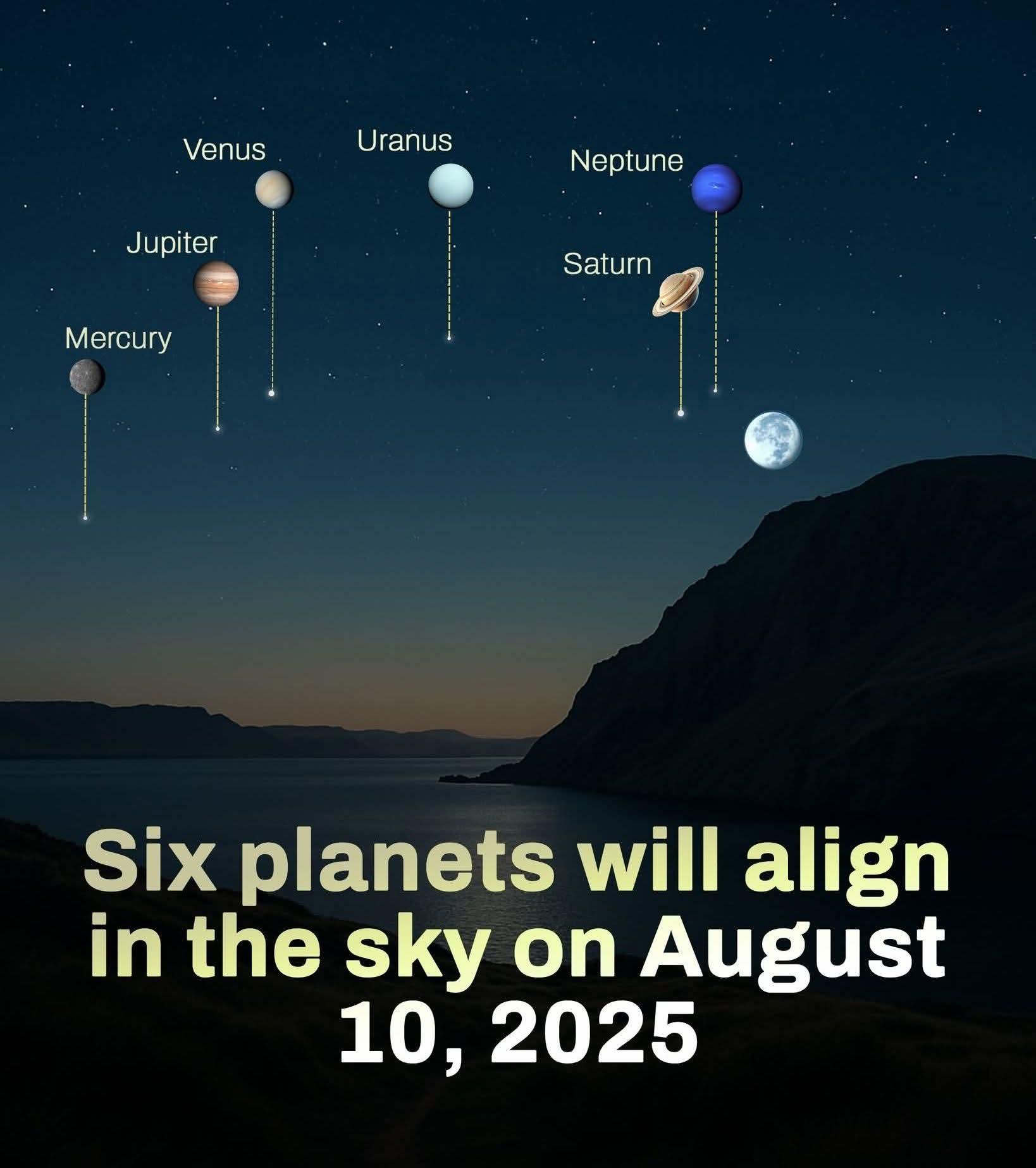
    On August 10, 2025, a stunning planetary alignment will unfold in the early morning sky as six planets—Mercury, Jupiter, Venus, Uranus, Neptune, and Saturn—line up just before sunrise. This rare event, often referred to as a planetary parade, will feature four bright planets—Mercury, Jupiter, Venus, and Saturn—clearly visible to the naked eye. The more distant Uranus and Neptune will also be part of the alignment but will require binoculars or a small telescope to observe. Visible about an hour before sunrise, this cosmic display offers a beautiful and accessible moment for skywatchers around the world to witness the Solar System’s harmony.
    0 Комментарии 0 Поделились 428 Просмотры
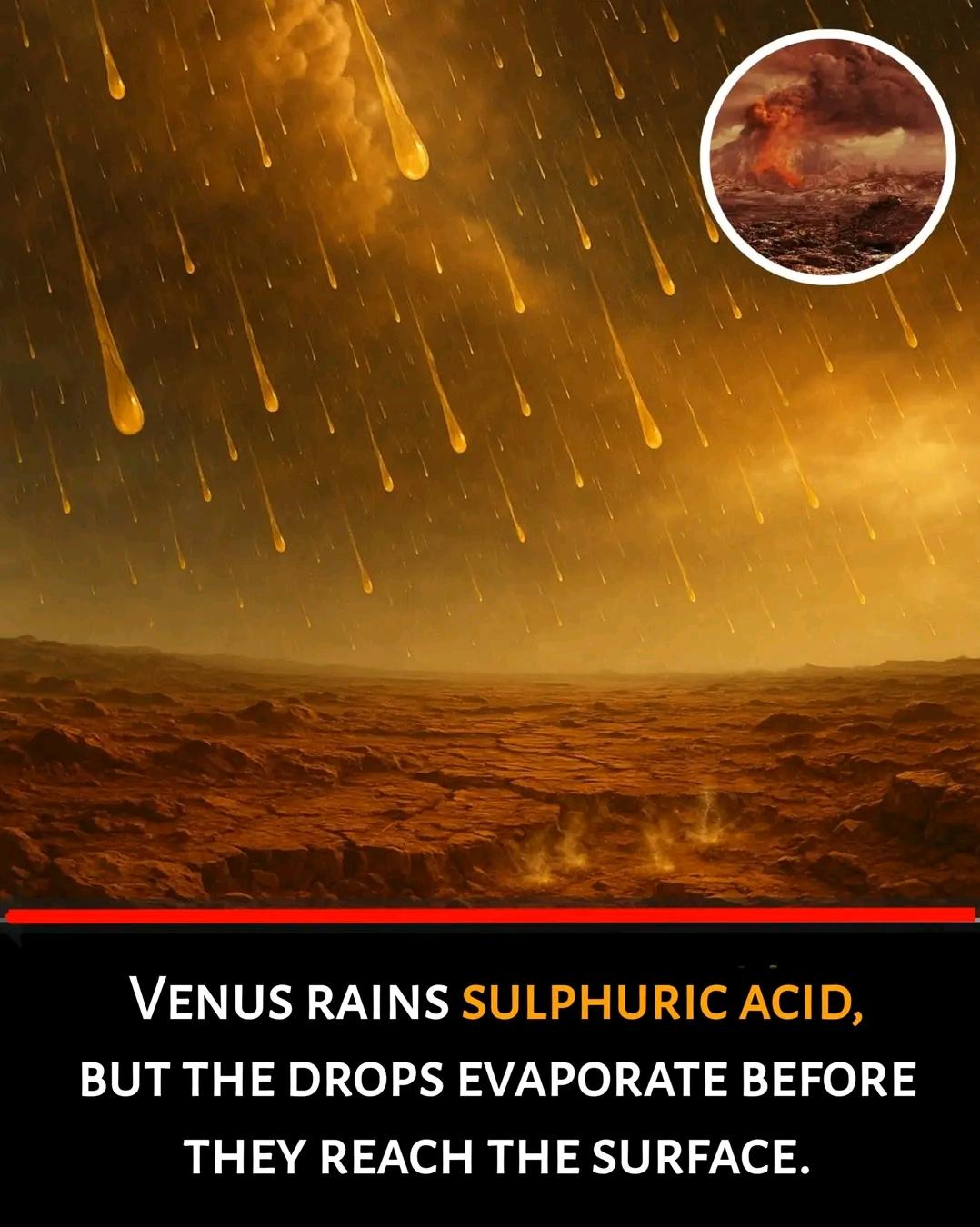
  • Venus, often called Earth’s twin due to its similar size and composition, has a radically different and hostile atmosphere. Its clouds are composed primarily of thick layers of sulfuric acid, formed when sulfur dioxide from volcanic activity reacts with water vapor high in the atmosphere. These clouds produce droplets of sulfuric acid, creating a kind of "acid rain" in the upper atmosphere. However, unlike rain on Earth, these droplets never reach the planet’s surface.

    As the sulfuric acid droplets fall through the dense and scorching atmosphere of Venus, temperatures rise dramatically — over 460°C (860°F) near the surface. This extreme heat causes the acid rain to evaporate long before it can hit the ground. The result is a toxic cycle where sulfuric acid rains down, evaporates mid-fall, and then rises again to recondense in the atmosphere. This process makes Venus one of the most chemically dynamic and inhospitable planets in our solar system.

    #spacefacts #venus #solarsystem
    Venus, often called Earth’s twin due to its similar size and composition, has a radically different and hostile atmosphere. Its clouds are composed primarily of thick layers of sulfuric acid, formed when sulfur dioxide from volcanic activity reacts with water vapor high in the atmosphere. These clouds produce droplets of sulfuric acid, creating a kind of "acid rain" in the upper atmosphere. However, unlike rain on Earth, these droplets never reach the planet’s surface. As the sulfuric acid droplets fall through the dense and scorching atmosphere of Venus, temperatures rise dramatically — over 460°C (860°F) near the surface. This extreme heat causes the acid rain to evaporate long before it can hit the ground. The result is a toxic cycle where sulfuric acid rains down, evaporates mid-fall, and then rises again to recondense in the atmosphere. This process makes Venus one of the most chemically dynamic and inhospitable planets in our solar system. #spacefacts #venus #solarsystem
    0 Комментарии 0 Поделились 669 Просмотры
  • 🌌✨Don't Miss These Two Amazing Sky Events on August 12, 2025

    🌠 Perseid Meteor Shower Peak

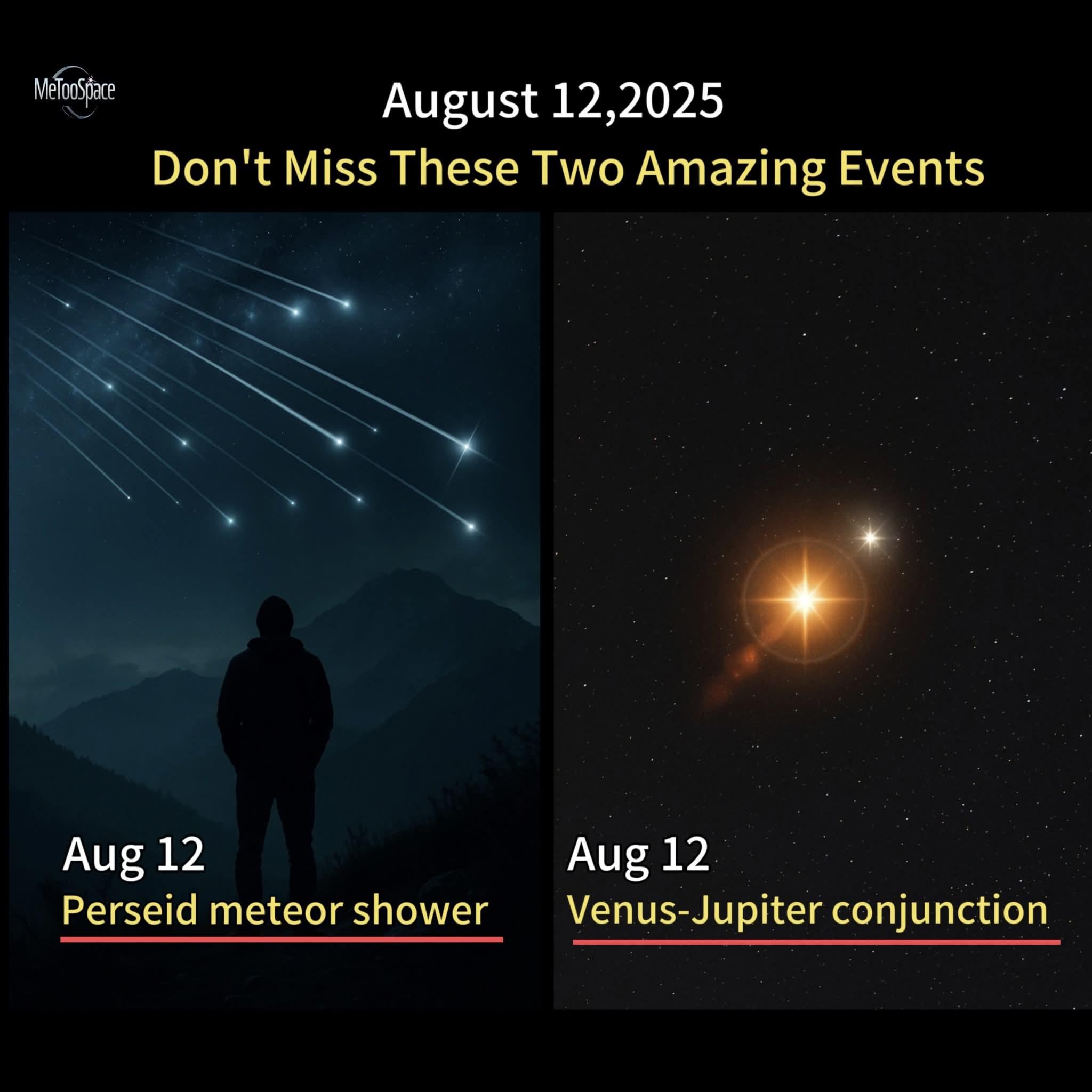
    On the night of August 12, the Perseid meteor shower reaches its spectacular peak. One of the most reliable and dazzling annual meteor showers, the Perseids can produce up to 100 meteors per hour under dark, clear skies. These meteors are fast, bright, and often leave long glowing trails. The best viewing time is after midnight and before dawn, away from city lights. Look toward the northeast sky, and be patient meteors may come in bursts or steady streams.

    Venus–Jupiter Conjunction

    Also on August 12, a rare and beautiful conjunction of Venus and Jupiter will occur. The two brightest planets in the night sky will appear very close together, almost like a double star. They will be visible just after sunset, low on the western horizon. This is a fantastic opportunity for the naked eye viewing, binoculars, or a small telescope. Don’t miss this stunning planetary meetup these two won't appear this close again for a while!
    #space #science #fact #facts
    🌌✨Don't Miss These Two Amazing Sky Events on August 12, 2025 🌠 Perseid Meteor Shower Peak On the night of August 12, the Perseid meteor shower reaches its spectacular peak. One of the most reliable and dazzling annual meteor showers, the Perseids can produce up to 100 meteors per hour under dark, clear skies. These meteors are fast, bright, and often leave long glowing trails. The best viewing time is after midnight and before dawn, away from city lights. Look toward the northeast sky, and be patient meteors may come in bursts or steady streams. Venus–Jupiter Conjunction Also on August 12, a rare and beautiful conjunction of Venus and Jupiter will occur. The two brightest planets in the night sky will appear very close together, almost like a double star. They will be visible just after sunset, low on the western horizon. This is a fantastic opportunity for the naked eye viewing, binoculars, or a small telescope. Don’t miss this stunning planetary meetup these two won't appear this close again for a while! #space #science #fact #facts
    0 Комментарии 0 Поделились 446 Просмотры
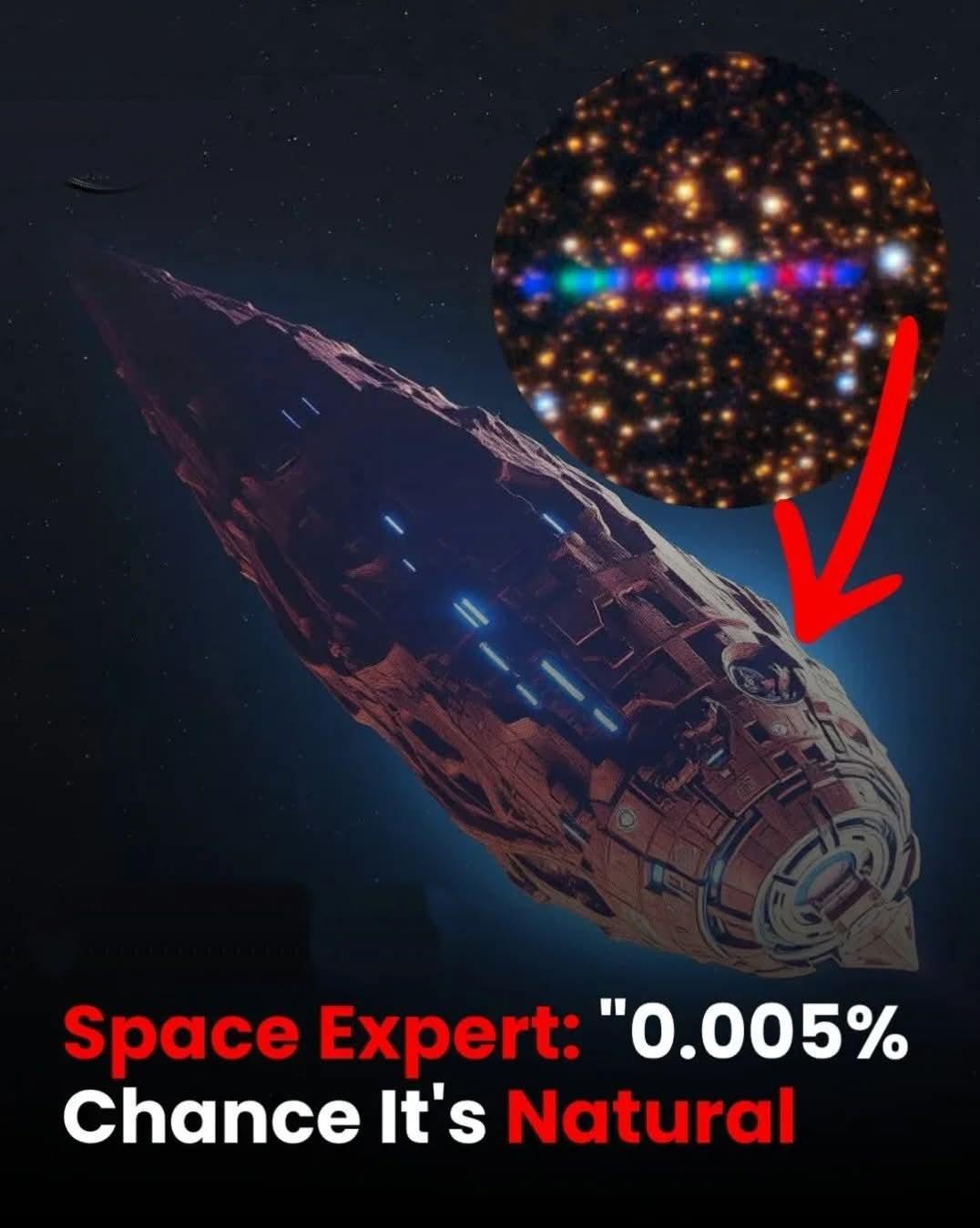
  • BREAKING: Harvard's Professor Avi Loeb calculates that the mysterious 3I/ATLAS interstellar object has only a 0.005% chance of being natural, raising alarming questions about its true origin. Racing toward our solar system at 60 kilometers per second, this Manhattan-sized visitor approached from the Milky Way center's direction - the perfect camouflage for an undetected approach.

    As Loeb warns in his latest Medium article: "If 3I/ATLAS represents a spacecraft of 20-kilometer size, as envisioned by Arthur C. Clark in his novel 'Rendezvous with Rama,' we should worry about its intent." The timing is chilling - this object could have started its 80-year journey just as humanity began widespread radio broadcasting, effectively announcing our technological civilization to the cosmos.

    Loeb emphasizes that our chemical rockets cannot bridge the 98 kilometer-per-second velocity gap, leaving humanity essentially defenseless if this proves to be alien technology. With no international protocol for alien contact and the object's trajectory perfectly aligned to study Venus, Mars, and Jupiter, we're facing humanity's most critical moment.

    #aliens #alienspaceship #trendingnow
    BREAKING: Harvard's Professor Avi Loeb calculates that the mysterious 3I/ATLAS interstellar object has only a 0.005% chance of being natural, raising alarming questions about its true origin. Racing toward our solar system at 60 kilometers per second, this Manhattan-sized visitor approached from the Milky Way center's direction - the perfect camouflage for an undetected approach. As Loeb warns in his latest Medium article: "If 3I/ATLAS represents a spacecraft of 20-kilometer size, as envisioned by Arthur C. Clark in his novel 'Rendezvous with Rama,' we should worry about its intent." The timing is chilling - this object could have started its 80-year journey just as humanity began widespread radio broadcasting, effectively announcing our technological civilization to the cosmos. Loeb emphasizes that our chemical rockets cannot bridge the 98 kilometer-per-second velocity gap, leaving humanity essentially defenseless if this proves to be alien technology. With no international protocol for alien contact and the object's trajectory perfectly aligned to study Venus, Mars, and Jupiter, we're facing humanity's most critical moment. #aliens #alienspaceship #trendingnow
    Love
    1
    0 Комментарии 0 Поделились 413 Просмотры
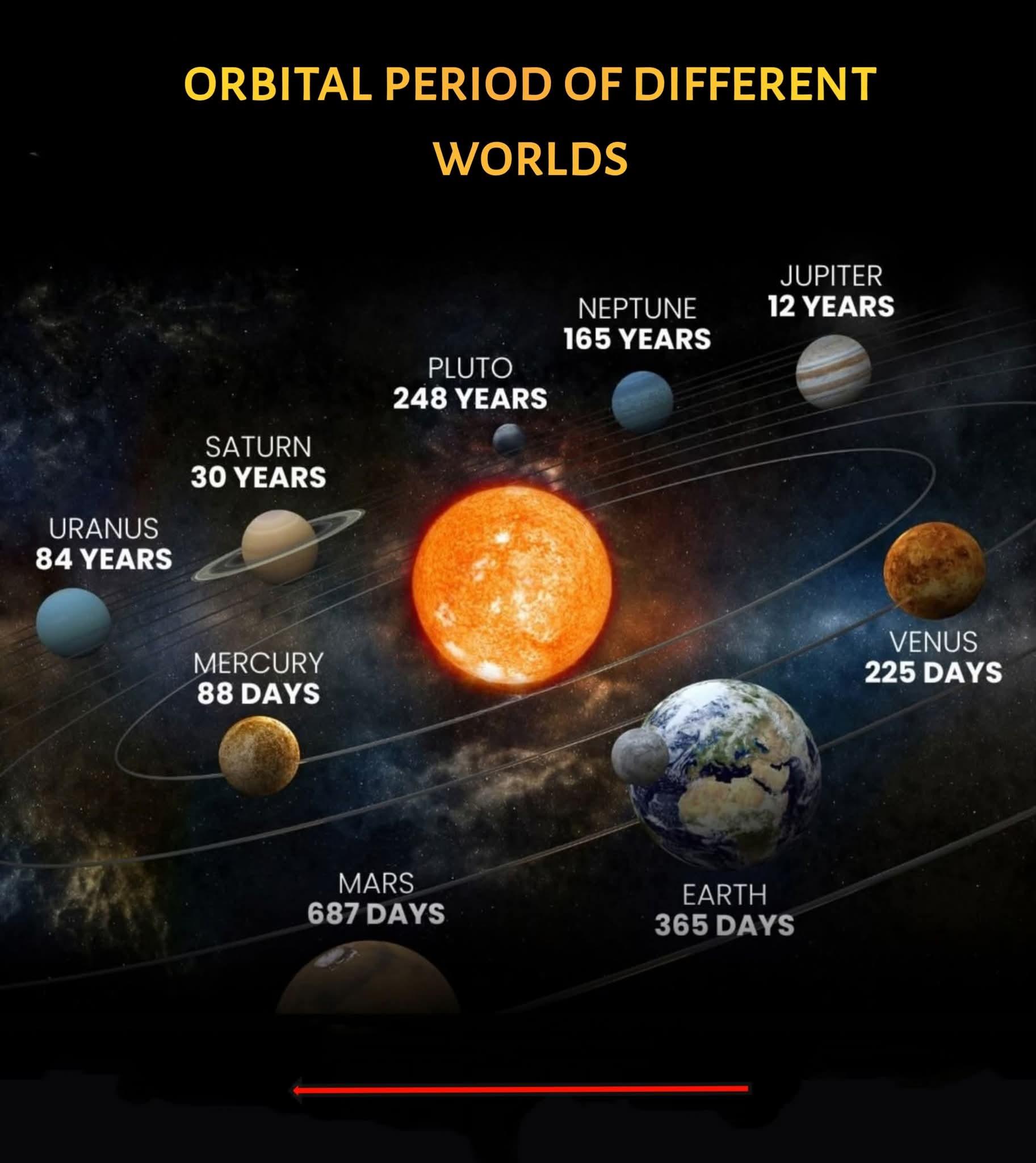
  • Every Planet’s Year: The Solar System’s Unique Rhythms of Time

    Our solar system is a grand cosmic clock, and each world keeps its own remarkable beat as it orbits the Sun. The innermost planet, Mercury, whips around the Sun in just 88 days, making its years blazingly short. Next comes Venus, whose elegant journey takes 225 days, while our own Earth completes its familiar lap in 365 days a rhythm we live by.

    As you move outward, the years grow longer. Mars takes 687 days to orbit, giving it seasons nearly twice as long as ours. The gas giants spin in slow motion by comparison: Jupiter circles the Sun every 12 years, Saturn every 30 years, Uranus every 84 years, and Neptune takes an astonishing 165 years to finish just one solar orbit. Pluto, though now classified as a dwarf planet, completes its lonely, distant trek in a staggering 248 years a reminder of the vastness of our solar system.

    Each planet’s orbital period shapes its seasons, its history, and even its potential for life. These cosmic cycles, from quick to epic, are a testament to the dance of gravity that binds our planetary family together around the Sun.

    #solarsystem #spacefacts #
    Every Planet’s Year: The Solar System’s Unique Rhythms of Time Our solar system is a grand cosmic clock, and each world keeps its own remarkable beat as it orbits the Sun. The innermost planet, Mercury, whips around the Sun in just 88 days, making its years blazingly short. Next comes Venus, whose elegant journey takes 225 days, while our own Earth completes its familiar lap in 365 days a rhythm we live by. As you move outward, the years grow longer. Mars takes 687 days to orbit, giving it seasons nearly twice as long as ours. The gas giants spin in slow motion by comparison: Jupiter circles the Sun every 12 years, Saturn every 30 years, Uranus every 84 years, and Neptune takes an astonishing 165 years to finish just one solar orbit. Pluto, though now classified as a dwarf planet, completes its lonely, distant trek in a staggering 248 years a reminder of the vastness of our solar system. Each planet’s orbital period shapes its seasons, its history, and even its potential for life. These cosmic cycles, from quick to epic, are a testament to the dance of gravity that binds our planetary family together around the Sun. #solarsystem #spacefacts #
    0 Комментарии 0 Поделились 498 Просмотры
BlackBird Ai
https://bbai.shop