


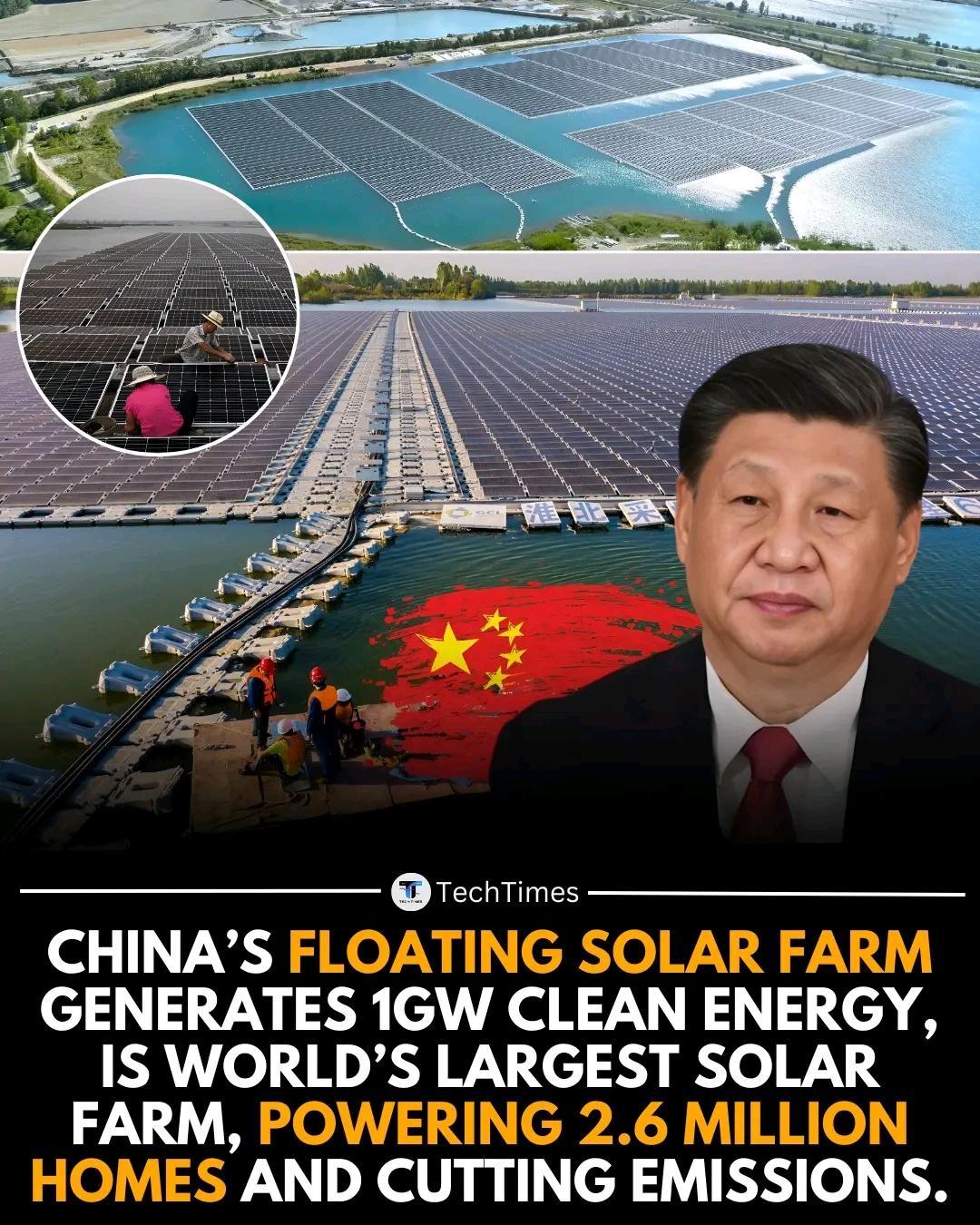
• China’s Huainan solar farm, built atop a former coal mine in Anhui Province, is now the largest floating solar power station on Earth. Spanning over 13,000 solar panels on a lake formed from a collapsed coal mine, it produces 1 gigawatt of electricity—enough to power 2.6 million homes annually.

    This project not only reuses abandoned land but also helps cool the panels for greater efficiency while dramatically cutting carbon emissions. It's a powerful symbol of China’s shift from coal to clean energy.

    #FloatingSolarFarm #ChinaSolarPower #RenewableEnergy #CleanEnergyRevolution #1GWEnergy #SustainableInnovation #SolarEnergy
    China’s Huainan solar farm, built atop a former coal mine in Anhui Province, is now the largest floating solar power station on Earth. Spanning over 13,000 solar panels on a lake formed from a collapsed coal mine, it produces 1 gigawatt of electricity—enough to power 2.6 million homes annually. This project not only reuses abandoned land but also helps cool the panels for greater efficiency while dramatically cutting carbon emissions. It's a powerful symbol of China’s shift from coal to clean energy. #FloatingSolarFarm #ChinaSolarPower #RenewableEnergy #CleanEnergyRevolution #1GWEnergy #SustainableInnovation #SolarEnergy
    0 Комментарии 0 Поделились 571 Просмотры
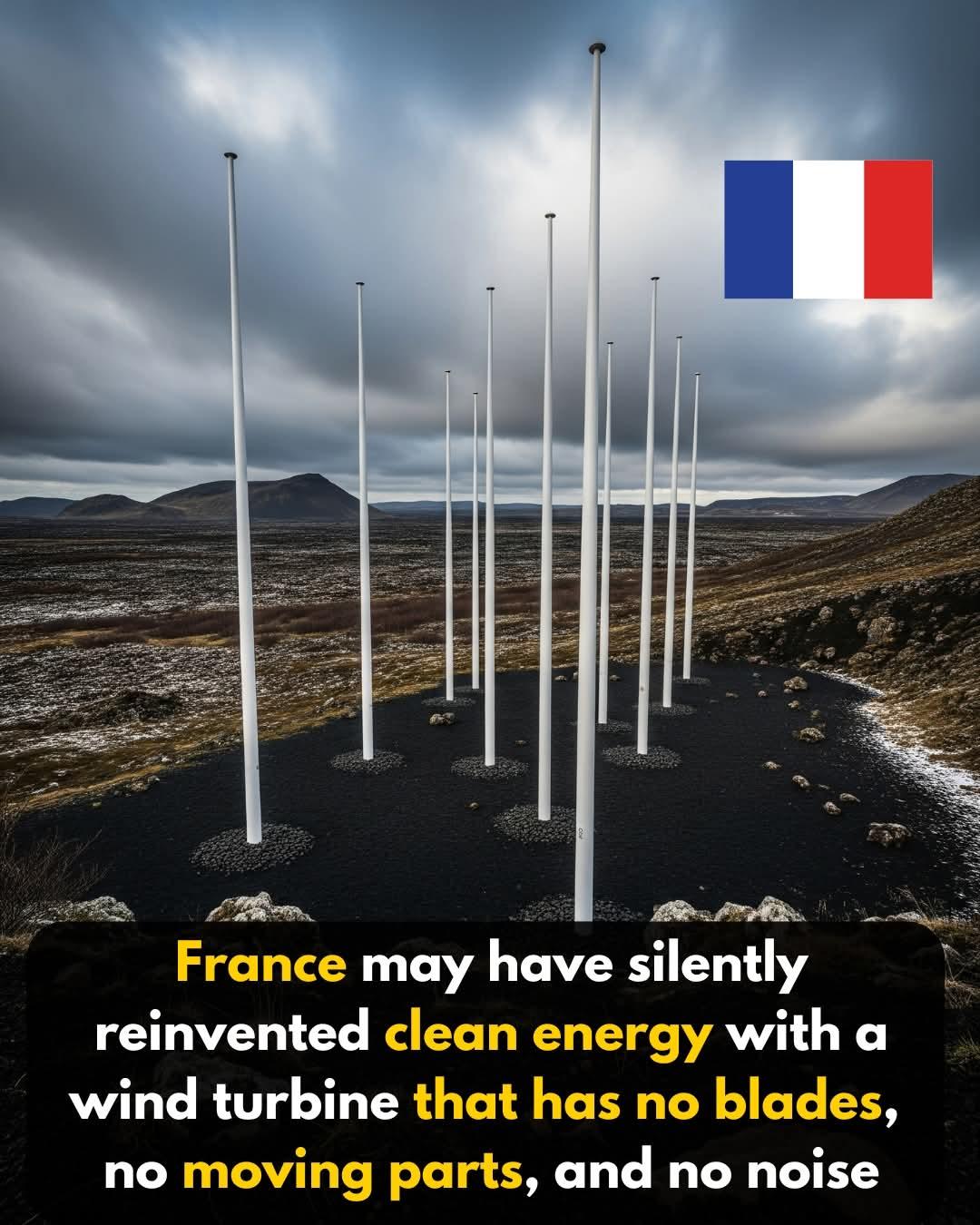
  • France is making notable progress in clean energy with the development of bladeless wind turbines — a quieter, low-maintenance alternative to traditional models. These innovative vortex wind generators, created by companies like Vortex Bladeless, use wind-induced vibrations rather than spinning blades to produce electricity.

    When wind passes a tall, slender cylinder, it creates alternating pressure zones that cause the structure to sway. This movement is then transformed into energy through piezoelectric materials or magnetic induction, eliminating the need for moving parts like gears or blades, and significantly reducing maintenance.

    Unlike traditional turbines, these bladeless systems are nearly silent (emitting less than 20 Hz), pose no risk to birds, and require much less space, making them ideal for use in urban or residential settings. They're also more affordable to produce and install and can be paired with solar panels in hybrid renewable energy setups.

    Prototypes such as the Vortex Nano (1 meter, 3W) and Tacoma (2.75 meters, 100W) currently produce less energy than standard turbines, but ongoing research — including studies by the University of Glasgow — aims to enhance their efficiency. Still in early stages, this technology has the potential to revolutionize wind power, particularly in areas with limited space or strict noise regulations.
    France is making notable progress in clean energy with the development of bladeless wind turbines — a quieter, low-maintenance alternative to traditional models. These innovative vortex wind generators, created by companies like Vortex Bladeless, use wind-induced vibrations rather than spinning blades to produce electricity. When wind passes a tall, slender cylinder, it creates alternating pressure zones that cause the structure to sway. This movement is then transformed into energy through piezoelectric materials or magnetic induction, eliminating the need for moving parts like gears or blades, and significantly reducing maintenance. Unlike traditional turbines, these bladeless systems are nearly silent (emitting less than 20 Hz), pose no risk to birds, and require much less space, making them ideal for use in urban or residential settings. They're also more affordable to produce and install and can be paired with solar panels in hybrid renewable energy setups. Prototypes such as the Vortex Nano (1 meter, 3W) and Tacoma (2.75 meters, 100W) currently produce less energy than standard turbines, but ongoing research — including studies by the University of Glasgow — aims to enhance their efficiency. Still in early stages, this technology has the potential to revolutionize wind power, particularly in areas with limited space or strict noise regulations.
    0 Комментарии 0 Поделились 362 Просмотры
  • Built for U.S. researchers, Nexus delivers 400 quadrillion ops/sec, 330 TB memory, and 10 PB flash storage!

    Georgia Tech, backed by a $20 million NSF grant, is building Nexus, an AI-powered supercomputer set to launch in spring 2026.

    Capable of over 400 quadrillion operations per second, Nexus will support research in fields like medicine, clean energy, and climate modeling.

    Designed for accessibility, it will connect with the National Center for Supercomputing Applications via a high-speed network, democratizing AI tools for U.S. researchers.
    Built for U.S. researchers, Nexus delivers 400 quadrillion ops/sec, 330 TB memory, and 10 PB flash storage! Georgia Tech, backed by a $20 million NSF grant, is building Nexus, an AI-powered supercomputer set to launch in spring 2026. Capable of over 400 quadrillion operations per second, Nexus will support research in fields like medicine, clean energy, and climate modeling. Designed for accessibility, it will connect with the National Center for Supercomputing Applications via a high-speed network, democratizing AI tools for U.S. researchers.
    0 Комментарии 0 Поделились 267 Просмотры
  • 🌍⚡ A Hydropower Revolution—No Rivers, No Dams!

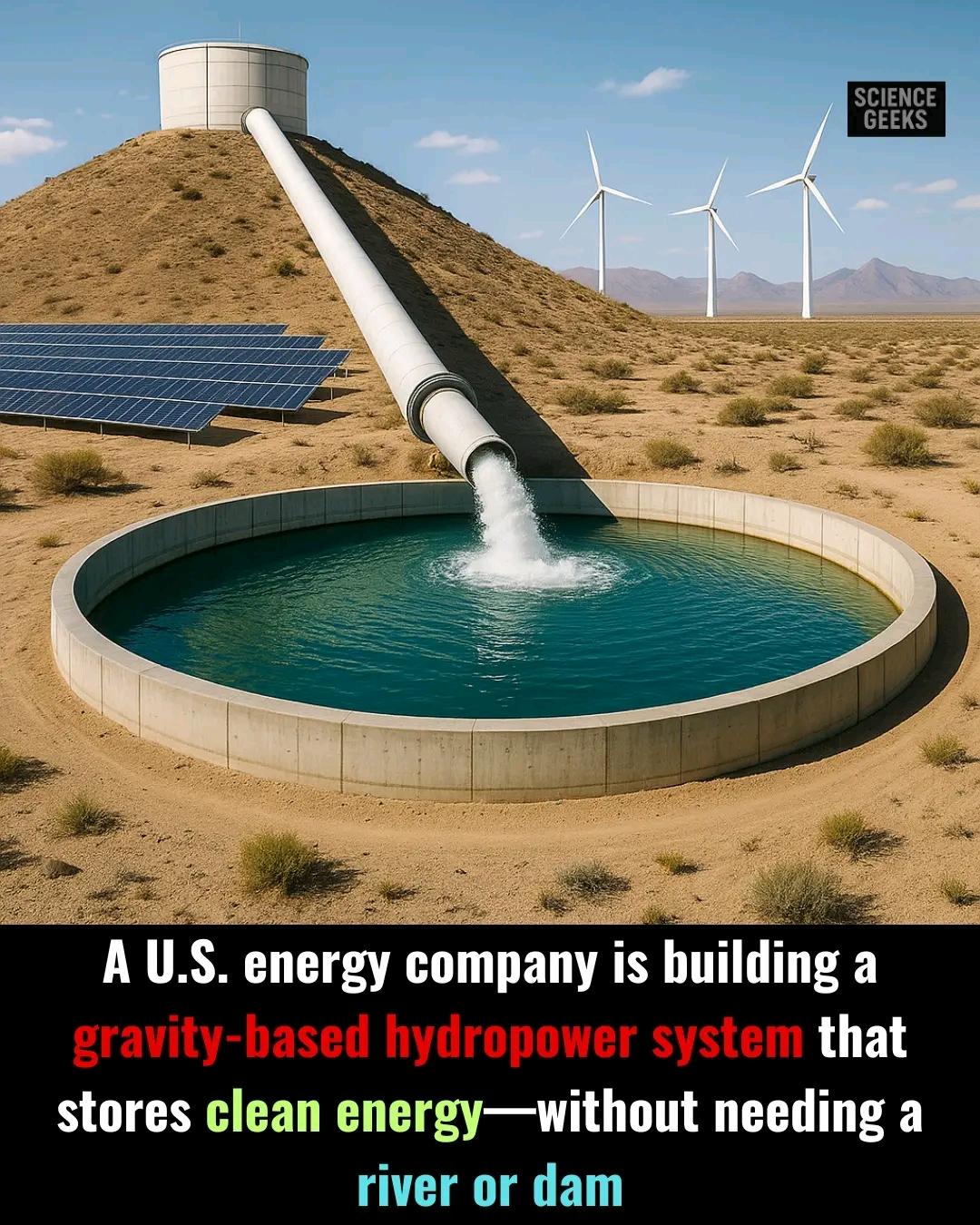
    A groundbreaking renewable energy solution is transforming the way we store clean energy—without relying on rivers or dams. Using gravity, elevation, and recycled water, this innovation is perfectly suited for arid areas like deserts and flatlands. 🏜️💧

    ☀️💨 Fueled by solar or wind power, water is pumped uphill into storage tanks.
    When energy is needed, the water flows back down through turbines, generating electricity with over 80% efficiency—comparable to lithium-ion batteries.

    ✅ Operates on dry terrain
    ✅ No toxic mining involved
    ✅ Outlasts traditional batteries
    ✅ Ideal for both off-grid and urban power needs

    Already tested successfully in Arizona and Nevada, this technology is paving the way for sustainable, scalable energy storage—delivering reliable green power to even the most remote regions. 🔋🌱

    #GravityPower #RenewableEnergy #CleanPower #HydropowerReimagined #SolarEnergy #WindEnergy #GreenInnovation #EnergyStorage #SustainableTech #ClimateAction #USA #DesertTech #PowerTheFuture
    🌍⚡ A Hydropower Revolution—No Rivers, No Dams! A groundbreaking renewable energy solution is transforming the way we store clean energy—without relying on rivers or dams. Using gravity, elevation, and recycled water, this innovation is perfectly suited for arid areas like deserts and flatlands. 🏜️💧 ☀️💨 Fueled by solar or wind power, water is pumped uphill into storage tanks. When energy is needed, the water flows back down through turbines, generating electricity with over 80% efficiency—comparable to lithium-ion batteries. ✅ Operates on dry terrain ✅ No toxic mining involved ✅ Outlasts traditional batteries ✅ Ideal for both off-grid and urban power needs Already tested successfully in Arizona and Nevada, this technology is paving the way for sustainable, scalable energy storage—delivering reliable green power to even the most remote regions. 🔋🌱 #GravityPower #RenewableEnergy #CleanPower #HydropowerReimagined #SolarEnergy #WindEnergy #GreenInnovation #EnergyStorage #SustainableTech #ClimateAction #USA #DesertTech #PowerTheFuture
    0 Комментарии 0 Поделились 617 Просмотры
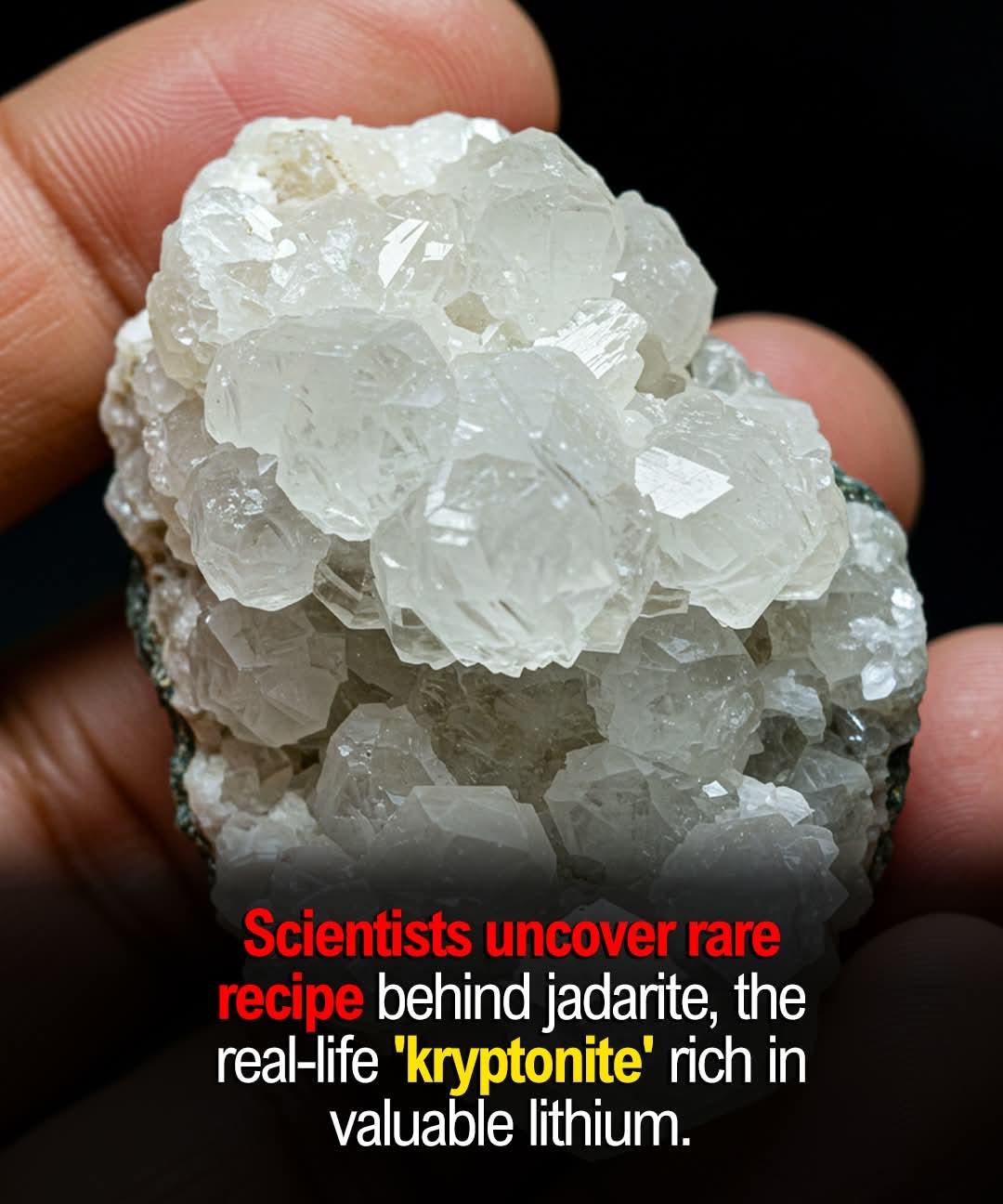
  • While kryptonite may be best known as Superman’s ultimate weakness, its real-world twin, jadarite, could be humanity’s secret weapon in the shift to clean energy. First discovered in Serbia’s Jadar Basin in 2004, jadarite is a rare white mineral made of sodium lithium borosilicate hydroxide—almost chemically identical to the fictional version. Now, scientists at the Natural History Museum in the U.K. have figured out the exact "recipe" for how this rare mineral forms, explaining why it’s only ever been found in one place on Earth.

    Researchers found that jadarite only forms under extremely precise geological conditions—think of it like baking a cake where the temperature, ingredients, and timing have to be just right. For jadarite to crystallize, an unusual combination is needed: an alkaline-rich closed lake, volcanic glass full of lithium, and clay minerals all interacting in perfect harmony. If even one factor is off—too acidic, too cold—it doesn’t form.

    Why does this matter? Jadarite is incredibly rich in lithium, which is crucial for powering electric vehicle batteries and future fusion reactors. The Jadar deposit alone could supply up to 90% of Europe’s lithium needs. By understanding how jadarite forms, scientists now have a guide to look for it elsewhere, potentially unlocking more low-cost, high-efficiency sources of this critical mineral.

    So while kryptonite might weaken Superman, jadarite could help supercharge a greener future for us all.

    Nature Geoscience volume 18, page454 (2025)
    While kryptonite may be best known as Superman’s ultimate weakness, its real-world twin, jadarite, could be humanity’s secret weapon in the shift to clean energy. First discovered in Serbia’s Jadar Basin in 2004, jadarite is a rare white mineral made of sodium lithium borosilicate hydroxide—almost chemically identical to the fictional version. Now, scientists at the Natural History Museum in the U.K. have figured out the exact "recipe" for how this rare mineral forms, explaining why it’s only ever been found in one place on Earth. Researchers found that jadarite only forms under extremely precise geological conditions—think of it like baking a cake where the temperature, ingredients, and timing have to be just right. For jadarite to crystallize, an unusual combination is needed: an alkaline-rich closed lake, volcanic glass full of lithium, and clay minerals all interacting in perfect harmony. If even one factor is off—too acidic, too cold—it doesn’t form. Why does this matter? Jadarite is incredibly rich in lithium, which is crucial for powering electric vehicle batteries and future fusion reactors. The Jadar deposit alone could supply up to 90% of Europe’s lithium needs. By understanding how jadarite forms, scientists now have a guide to look for it elsewhere, potentially unlocking more low-cost, high-efficiency sources of this critical mineral. So while kryptonite might weaken Superman, jadarite could help supercharge a greener future for us all. Nature Geoscience volume 18, page454 (2025)
    0 Комментарии 0 Поделились 425 Просмотры
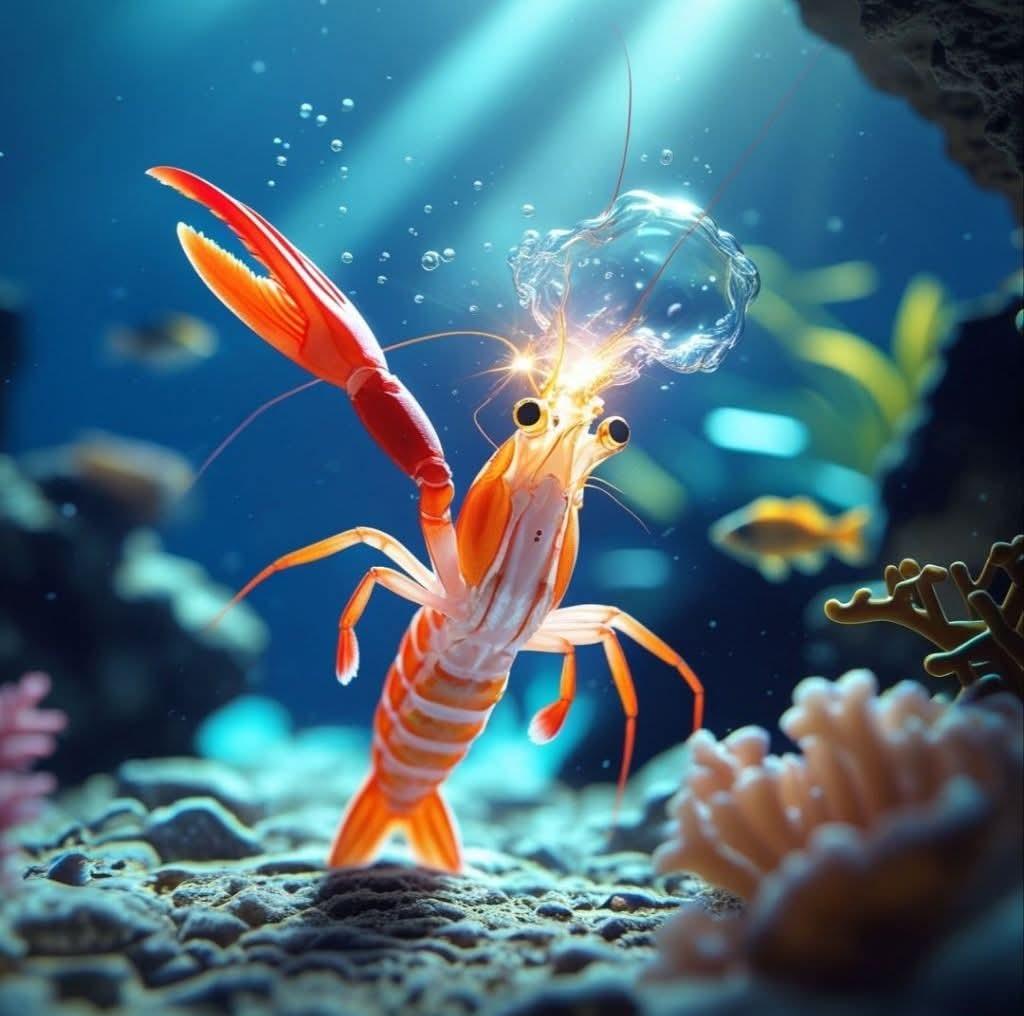
  • The pistol shrimp may be tiny, but its claw is one of the most powerful biological weapons in the ocean. When it snaps, it creates a high-velocity bubble that collapses with a force reaching 218 decibels — louder than a gunshot. This snap generates a momentary temperature of over 8,000°F, hotter than the surface of the Sun. The bubble can stun or kill small prey instantly. Its power is so intense, it has even interfered with military sonar during naval operations. Today, scientists are studying the mechanics of its claw for breakthroughs in clean energy and fusion technology.
    The pistol shrimp may be tiny, but its claw is one of the most powerful biological weapons in the ocean. When it snaps, it creates a high-velocity bubble that collapses with a force reaching 218 decibels — louder than a gunshot. This snap generates a momentary temperature of over 8,000°F, hotter than the surface of the Sun. The bubble can stun or kill small prey instantly. Its power is so intense, it has even interfered with military sonar during naval operations. Today, scientists are studying the mechanics of its claw for breakthroughs in clean energy and fusion technology.
    Wow
    1
    0 Комментарии 0 Поделились 427 Просмотры
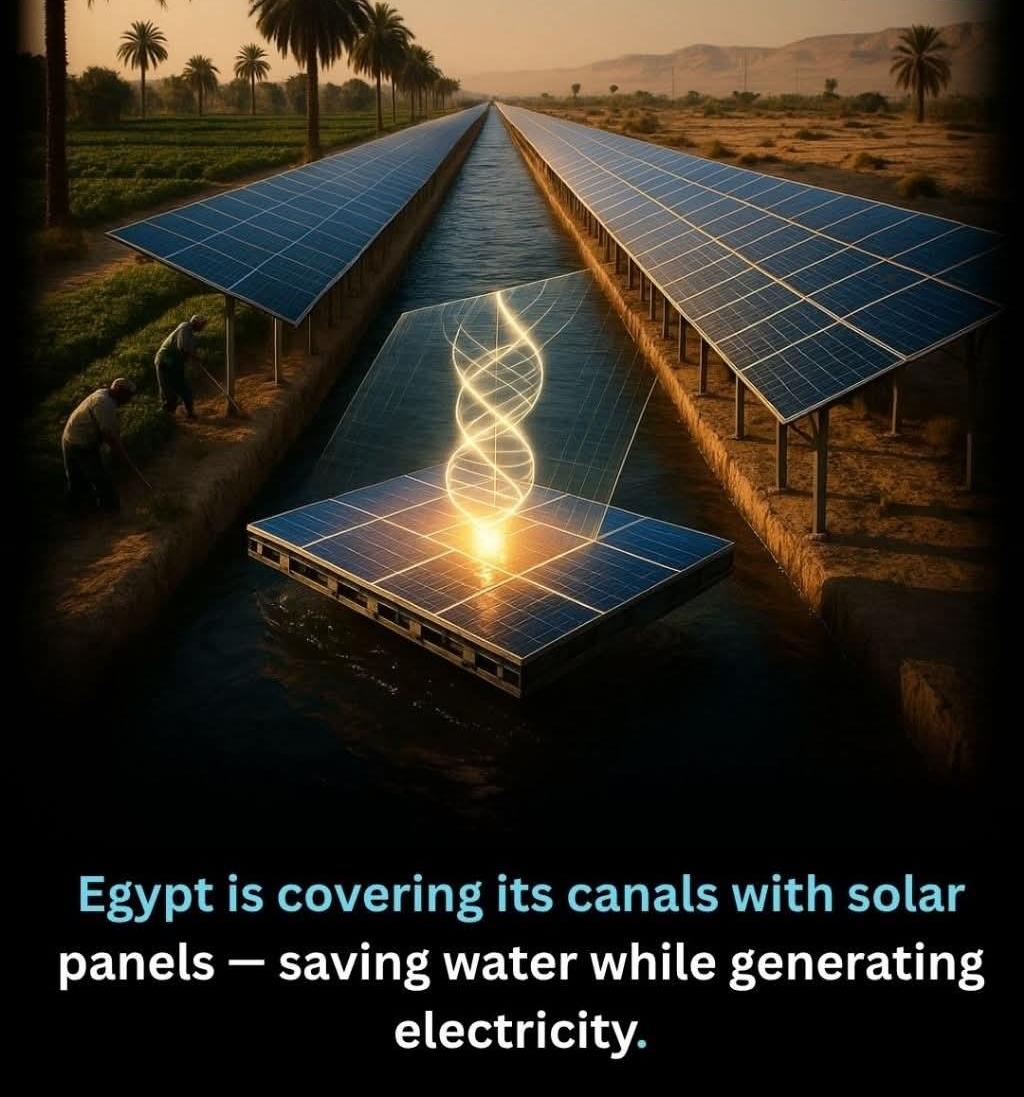
  • In the blazing sun of northern Egypt, a quiet revolution is unfolding — above the canals.

    Instead of leaving water to evaporate under desert heat, engineers are installing solar panels over irrigation canals. These panels do two things at once:

    🌞 Generate clean energy
    💧 Reduce water loss by up to 70%

    The solar roofs also shade crops nearby, cut algae growth, and reduce land use — turning every canal into a solar corridor.
    In the blazing sun of northern Egypt, a quiet revolution is unfolding — above the canals. Instead of leaving water to evaporate under desert heat, engineers are installing solar panels over irrigation canals. These panels do two things at once: 🌞 Generate clean energy 💧 Reduce water loss by up to 70% The solar roofs also shade crops nearby, cut algae growth, and reduce land use — turning every canal into a solar corridor.
    Love
    1
    0 Комментарии 0 Поделились 512 Просмотры
BlackBird Ai
https://bbai.shop