


• Stanford researchers have created a groundbreaking tool called the “milli-spinner” that could save countless lives by transforming stroke treatment. This tiny device spins and compresses blood clots blocking brain arteries, allowing doctors to remove them far more effectively than current methods. Traditional thrombectomy uses a catheter to suck up or snare clots but often leaves dangerous fragments behind or breaks clots into smaller pieces that can cause further blockages.

    The milli-spinner works smarter by carefully cutting and compressing clots up to 95 percent before vacuuming them out. This dramatically reduces leftover fragments and improves the chances of fully restoring blood flow on the first attempt. For the toughest clots, success rates soared from just 11 percent with standard tools to a remarkable 90 percent using the milli-spinner.

    This breakthrough could be a game-changer for stroke patients, potentially reducing brain damage and long-term disability. Researchers believe this technology may also be adapted for other types of vascular blockages or even non-medical uses in the future. For now, it offers new hope to millions at risk of devastating strokes by helping doctors safely reopen clogged arteries before permanent harm occurs.

    #StrokeTreatment #MedicalInnovation #MilliSpinner #brainhealthtips

    Stanford researchers have created a groundbreaking tool called the “milli-spinner” that could save countless lives by transforming stroke treatment. This tiny device spins and compresses blood clots blocking brain arteries, allowing doctors to remove them far more effectively than current methods. Traditional thrombectomy uses a catheter to suck up or snare clots but often leaves dangerous fragments behind or breaks clots into smaller pieces that can cause further blockages. The milli-spinner works smarter by carefully cutting and compressing clots up to 95 percent before vacuuming them out. This dramatically reduces leftover fragments and improves the chances of fully restoring blood flow on the first attempt. For the toughest clots, success rates soared from just 11 percent with standard tools to a remarkable 90 percent using the milli-spinner. This breakthrough could be a game-changer for stroke patients, potentially reducing brain damage and long-term disability. Researchers believe this technology may also be adapted for other types of vascular blockages or even non-medical uses in the future. For now, it offers new hope to millions at risk of devastating strokes by helping doctors safely reopen clogged arteries before permanent harm occurs. #StrokeTreatment #MedicalInnovation #MilliSpinner #brainhealthtips
    0 التعليقات 0 المشاركات 3كيلو بايت مشاهدة
  • 🧠💻 Meet CL1 — The World’s First Commercial Biological Computer

    Unveiled at an international tech conference in Barcelona, Melbourne-based Cortical Labs has launched CL1, a groundbreaking system powered by lab-grown human neurons — available through a cloud-based “Wetware-as-a-Service” model.

    These living neurons can learn from inputs, building on the company’s 2022 feat of teaching neurons to play Pong.

    🚀 Potential applications:

    Disease modeling & drug testing

    Next-gen AI development

    Ultra-efficient, low-power computing

    💡 Unlike traditional AI, CL1 can process small datasets faster and with far less energy — but it’s still early days, with scientists working to unlock its full potential.

    This could be the start of a whole new era — where biology and technology merge in ways we’ve only imagined.

    #BioComputer #CorticalLabs #CL1 #NeuroTech #WetwareAsAService #AIInnovation #FutureComputing #TechBreakthrough #BarcelonaTech #BiologicalAI
    🧠💻 Meet CL1 — The World’s First Commercial Biological Computer Unveiled at an international tech conference in Barcelona, Melbourne-based Cortical Labs has launched CL1, a groundbreaking system powered by lab-grown human neurons — available through a cloud-based “Wetware-as-a-Service” model. These living neurons can learn from inputs, building on the company’s 2022 feat of teaching neurons to play Pong. 🚀 Potential applications: Disease modeling & drug testing Next-gen AI development Ultra-efficient, low-power computing 💡 Unlike traditional AI, CL1 can process small datasets faster and with far less energy — but it’s still early days, with scientists working to unlock its full potential. This could be the start of a whole new era — where biology and technology merge in ways we’ve only imagined. #BioComputer #CorticalLabs #CL1 #NeuroTech #WetwareAsAService #AIInnovation #FutureComputing #TechBreakthrough #BarcelonaTech #BiologicalAI
    0 التعليقات 0 المشاركات 829 مشاهدة
  • ✈️ তুরস্কের বিস্ময় – TALAY 🌊
    বিশ্বের প্রথম সমুদ্র-সংলগ্ন (Sea-Skimming) মাল্টি-পারপাস ড্রোন উন্মোচন করল তুরস্ক।
    মাত্র ৩ মিটার (প্রায় ৯.৮ ফুট) সমুদ্রের উপর দিয়ে উড়ে চলা এই ড্রোন গোপনীয়তা, গতি ও বহুমুখী সক্ষমতার এক অনন্য সমন্বয়।

    ⚡ সর্বোচ্চ গতি: ২০০ কিমি/ঘণ্টা (১২৪ মাইল/ঘণ্টা)
    ⏳ ফ্লাইট সময়: ৩ ঘণ্টা
    📦 পেলোড ক্ষমতা: ৩০ কেজি (৬৬ পাউন্ড)
    🔋 ইঞ্জিন: বৈদ্যুতিক + AI নিয়ন্ত্রিত ফ্লাইট সিস্টেম

    তীরে পাহারা, নজরদারি থেকে শুরু করে নির্ভুল হামলা—TALAY অশান্ত সমুদ্রেও কার্যকরভাবে উড়তে পারে এবং প্রায় রাডারে ধরা পড়ে না। নৌযুদ্ধের কৌশলে এটি হতে পারে গেম-চেঞ্জার।

    -
    Turkey has unveiled the world’s first Sea-Skimming multipurpose drone.
    Flying just 3 meters (about 9.8 feet) above the sea, this drone combines stealth, speed, and versatile capabilities in a single platform.

    ⚡ Top Speed: 200 km/h (124 mph)
    ⏳ Flight Time: 3 hours
    📦 Payload Capacity: 30 kg (66 lbs)
    🔋 Engine: Electric + AI-controlled flight system

    From coastal patrols and surveillance to precision strikes—TALAY can operate effectively even in rough seas while remaining almost invisible to radar. It could be a true game-changer in naval warfare strategy.

    #Turkey #TALAY #SeaSkimming #MilitaryDrone #NavalInnovation #DroneTechnology #DefenceTech #Aerospace #NextGenWarfare #NavalWarfare #Drone
    ✈️ তুরস্কের বিস্ময় – TALAY 🌊 বিশ্বের প্রথম সমুদ্র-সংলগ্ন (Sea-Skimming) মাল্টি-পারপাস ড্রোন উন্মোচন করল তুরস্ক। মাত্র ৩ মিটার (প্রায় ৯.৮ ফুট) সমুদ্রের উপর দিয়ে উড়ে চলা এই ড্রোন গোপনীয়তা, গতি ও বহুমুখী সক্ষমতার এক অনন্য সমন্বয়। ⚡ সর্বোচ্চ গতি: ২০০ কিমি/ঘণ্টা (১২৪ মাইল/ঘণ্টা) ⏳ ফ্লাইট সময়: ৩ ঘণ্টা 📦 পেলোড ক্ষমতা: ৩০ কেজি (৬৬ পাউন্ড) 🔋 ইঞ্জিন: বৈদ্যুতিক + AI নিয়ন্ত্রিত ফ্লাইট সিস্টেম তীরে পাহারা, নজরদারি থেকে শুরু করে নির্ভুল হামলা—TALAY অশান্ত সমুদ্রেও কার্যকরভাবে উড়তে পারে এবং প্রায় রাডারে ধরা পড়ে না। নৌযুদ্ধের কৌশলে এটি হতে পারে গেম-চেঞ্জার। - Turkey has unveiled the world’s first Sea-Skimming multipurpose drone. Flying just 3 meters (about 9.8 feet) above the sea, this drone combines stealth, speed, and versatile capabilities in a single platform. ⚡ Top Speed: 200 km/h (124 mph) ⏳ Flight Time: 3 hours 📦 Payload Capacity: 30 kg (66 lbs) 🔋 Engine: Electric + AI-controlled flight system From coastal patrols and surveillance to precision strikes—TALAY can operate effectively even in rough seas while remaining almost invisible to radar. It could be a true game-changer in naval warfare strategy. #Turkey #TALAY #SeaSkimming #MilitaryDrone #NavalInnovation #DroneTechnology #DefenceTech #Aerospace #NextGenWarfare #NavalWarfare #Drone।
    0 التعليقات 0 المشاركات 943 مشاهدة
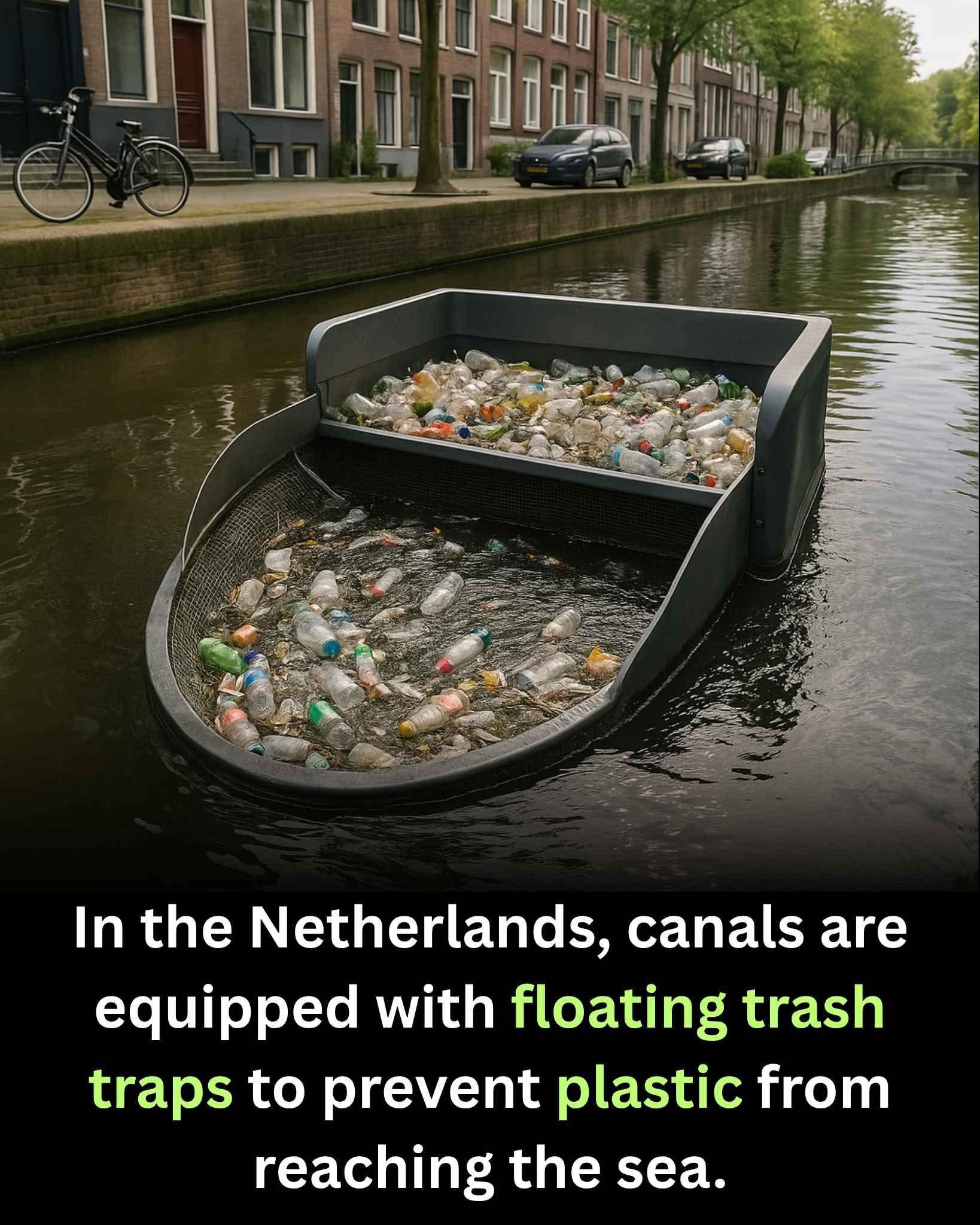
  • In the Netherlands, canals are now fitted with floating trash traps designed to stop plastic waste before it flows into rivers and eventually the sea. These innovative barriers are positioned strategically along waterways, using the natural flow of water to guide litter into collection points. The traps are designed to capture everything from small plastic bottles to larger debris without harming fish or disrupting boat traffic.
    Once collected, the waste is removed regularly and sent for recycling or proper disposal, ensuring it doesn’t contribute to marine pollution. This system tackles the problem at its source, preventing plastics from breaking down into harmful microplastics that are nearly impossible to remove from the ocean. It’s a proactive approach that aligns perfectly with the Netherlands’ strong environmental commitment.

    By keeping canals cleaner, these trash traps also improve the beauty of urban waterways, making them more pleasant for residents and tourists alike. Combined with public awareness campaigns about littering, the initiative represents a powerful step toward healthier waterways and oceans. It’s a reminder that small, targeted innovations can have a big impact in the global fight against plastic pollution.

    #CleanWaterways #PlasticFreeOceans #EcoInnovation
    In the Netherlands, canals are now fitted with floating trash traps designed to stop plastic waste before it flows into rivers and eventually the sea. These innovative barriers are positioned strategically along waterways, using the natural flow of water to guide litter into collection points. The traps are designed to capture everything from small plastic bottles to larger debris without harming fish or disrupting boat traffic. Once collected, the waste is removed regularly and sent for recycling or proper disposal, ensuring it doesn’t contribute to marine pollution. This system tackles the problem at its source, preventing plastics from breaking down into harmful microplastics that are nearly impossible to remove from the ocean. It’s a proactive approach that aligns perfectly with the Netherlands’ strong environmental commitment. By keeping canals cleaner, these trash traps also improve the beauty of urban waterways, making them more pleasant for residents and tourists alike. Combined with public awareness campaigns about littering, the initiative represents a powerful step toward healthier waterways and oceans. It’s a reminder that small, targeted innovations can have a big impact in the global fight against plastic pollution. #CleanWaterways #PlasticFreeOceans #EcoInnovation
    0 التعليقات 0 المشاركات 584 مشاهدة
  • 🚨 Next-Gen Heart Treatment?
    A groundbreaking device by Dahir Insaat could revolutionize how we treat clogged arteries — no open surgery required.

    🛠️ Inserted via the femoral artery, this tiny robot navigates directly to arterial blockages, temporarily halts blood flow, replaces it with saline for a clear view, then scrapes away cholesterol with pinpoint accuracy — all while protecting the artery walls.

    ⚡ Faster recovery
    🧠 Real-time camera guidance
    💉 Less risk than angioplasty or atherectomy

    If successful in real-world trials, this could be a game-changer in preventing heart attacks and strokes.

    #HeartHealth #CholesterolControl #NanoSurgery #MinimallyInvasive #MedicalBreakthrough #DahirInsaat #FutureOfMedicine #CardioTech #InnovationInHealthcare
    🚨 Next-Gen Heart Treatment? A groundbreaking device by Dahir Insaat could revolutionize how we treat clogged arteries — no open surgery required. 🛠️ Inserted via the femoral artery, this tiny robot navigates directly to arterial blockages, temporarily halts blood flow, replaces it with saline for a clear view, then scrapes away cholesterol with pinpoint accuracy — all while protecting the artery walls. ⚡ Faster recovery 🧠 Real-time camera guidance 💉 Less risk than angioplasty or atherectomy If successful in real-world trials, this could be a game-changer in preventing heart attacks and strokes. #HeartHealth #CholesterolControl #NanoSurgery #MinimallyInvasive #MedicalBreakthrough #DahirInsaat #FutureOfMedicine #CardioTech #InnovationInHealthcare
    0 التعليقات 0 المشاركات 764 مشاهدة
  • This House Literally Floats to Survive Powerful Earthquakes.

    Engineers in Japan are testing a futuristic earthquake defence system that could change how homes are built forever. In a country where tremors strike often and unpredictably, this groundbreaking technology could be the key to protecting lives, property, and peace of mind.

    Developed by Air Danshin Systems, the idea is as bold as it is brilliant. When an earthquake begins, high-speed sensors instantly detect the tremors. In less than a second, powerful air compressors activate, lifting the entire house a few centimetres off the ground using a cushion of compressed air. While the earth shakes beneath it, the home simply floats above the chaos. Once the shaking stops, the house gently returns to its original position, without damage, without stress.

    This technology is drastically different from traditional quake-resistant architecture, which relies on shock absorbers and flexible frames to handle seismic waves. Instead of fighting the movement, these floating homes rise above it entirely.

    The impact could be enormous. Every year, earthquakes cause billions in damage and displace thousands of families. This innovation has the potential to make homes safer, reduce insurance costs, and transform urban planning in quake-prone regions around the world.

    More than just an engineering achievement, this floating house represents a hopeful future where science defends us not only with strength but with grace. It’s a reminder that some of the most powerful solutions are also the most elegant.

    As global climate shifts increase the frequency of natural disasters, breakthroughs like this inspire a world where preparation and innovation walk hand in hand. The earth may move, but we don’t have to fall with it.

    #DiscoverTheUniverse #Discover #EarthquakeInnovation #FloatingHouse #DisasterTech
    This House Literally Floats to Survive Powerful Earthquakes. Engineers in Japan are testing a futuristic earthquake defence system that could change how homes are built forever. In a country where tremors strike often and unpredictably, this groundbreaking technology could be the key to protecting lives, property, and peace of mind. Developed by Air Danshin Systems, the idea is as bold as it is brilliant. When an earthquake begins, high-speed sensors instantly detect the tremors. In less than a second, powerful air compressors activate, lifting the entire house a few centimetres off the ground using a cushion of compressed air. While the earth shakes beneath it, the home simply floats above the chaos. Once the shaking stops, the house gently returns to its original position, without damage, without stress. This technology is drastically different from traditional quake-resistant architecture, which relies on shock absorbers and flexible frames to handle seismic waves. Instead of fighting the movement, these floating homes rise above it entirely. The impact could be enormous. Every year, earthquakes cause billions in damage and displace thousands of families. This innovation has the potential to make homes safer, reduce insurance costs, and transform urban planning in quake-prone regions around the world. More than just an engineering achievement, this floating house represents a hopeful future where science defends us not only with strength but with grace. It’s a reminder that some of the most powerful solutions are also the most elegant. As global climate shifts increase the frequency of natural disasters, breakthroughs like this inspire a world where preparation and innovation walk hand in hand. The earth may move, but we don’t have to fall with it. #DiscoverTheUniverse #Discover #EarthquakeInnovation #FloatingHouse #DisasterTech
    0 التعليقات 0 المشاركات 807 مشاهدة
  • In China’s Songjiang district, just outside Shanghai, engineers achieved a remarkable feat of architecture by building the InterContinental Shanghai Wonderland — a 5-star luxury hotel constructed entirely inside an abandoned quarry. Known as the “Shimao Quarry Hotel,” this 18-story marvel plunges 88 meters below ground level, with 16 floors built inside the rock face and 2 submerged underwater. The project began in 2006 and took over 12 years and $500 million to complete, finally opening its doors in 2018.

    Rather than altering the landscape, the design harmonizes with nature. The hotel features waterfalls flowing down the quarry walls, a glass-bottomed skywalk, and underwater suites offering views of an aquarium-style lagoon. Its construction was considered nearly impossible due to engineering challenges like water seepage, structural safety, and environmental preservation. Today, the hotel stands as a symbol of modern architectural innovation — turning a once-forgotten industrial scar into a breathtaking luxury destination.
    In China’s Songjiang district, just outside Shanghai, engineers achieved a remarkable feat of architecture by building the InterContinental Shanghai Wonderland — a 5-star luxury hotel constructed entirely inside an abandoned quarry. Known as the “Shimao Quarry Hotel,” this 18-story marvel plunges 88 meters below ground level, with 16 floors built inside the rock face and 2 submerged underwater. The project began in 2006 and took over 12 years and $500 million to complete, finally opening its doors in 2018. Rather than altering the landscape, the design harmonizes with nature. The hotel features waterfalls flowing down the quarry walls, a glass-bottomed skywalk, and underwater suites offering views of an aquarium-style lagoon. Its construction was considered nearly impossible due to engineering challenges like water seepage, structural safety, and environmental preservation. Today, the hotel stands as a symbol of modern architectural innovation — turning a once-forgotten industrial scar into a breathtaking luxury destination.
    0 التعليقات 0 المشاركات 436 مشاهدة
  • A Dutch company has created solar-powered floating schools, a brilliant solution for flood-prone regions where traditional classrooms are often unusable during rainy seasons. These innovative structures are built on buoyant platforms that rise and fall with water levels, ensuring education continues uninterrupted year-round.

    Equipped with rooftop solar panels, the schools generate their own electricity, powering lights, fans, and learning tools without relying on unstable local grids. They also feature rainwater harvesting systems and eco-friendly materials, making them sustainable and self-sufficient. Inside, classrooms are bright, ventilated, and designed to withstand harsh weather.

    This approach not only keeps children in school during floods but also turns the buildings into community hubs for disaster resilience. By combining renewable energy, climate adaptation, and education, these floating schools are proving that innovation can thrive even in the face of nature’s challenges.

    #ClimateResilientEducation #SolarInnovation #FloatingSchools
    A Dutch company has created solar-powered floating schools, a brilliant solution for flood-prone regions where traditional classrooms are often unusable during rainy seasons. These innovative structures are built on buoyant platforms that rise and fall with water levels, ensuring education continues uninterrupted year-round. Equipped with rooftop solar panels, the schools generate their own electricity, powering lights, fans, and learning tools without relying on unstable local grids. They also feature rainwater harvesting systems and eco-friendly materials, making them sustainable and self-sufficient. Inside, classrooms are bright, ventilated, and designed to withstand harsh weather. This approach not only keeps children in school during floods but also turns the buildings into community hubs for disaster resilience. By combining renewable energy, climate adaptation, and education, these floating schools are proving that innovation can thrive even in the face of nature’s challenges. #ClimateResilientEducation #SolarInnovation #FloatingSchools
    0 التعليقات 0 المشاركات 439 مشاهدة
  • China’s Huainan solar farm, built atop a former coal mine in Anhui Province, is now the largest floating solar power station on Earth. Spanning over 13,000 solar panels on a lake formed from a collapsed coal mine, it produces 1 gigawatt of electricity—enough to power 2.6 million homes annually.

    This project not only reuses abandoned land but also helps cool the panels for greater efficiency while dramatically cutting carbon emissions. It's a powerful symbol of China’s shift from coal to clean energy.

    #FloatingSolarFarm #ChinaSolarPower #RenewableEnergy #CleanEnergyRevolution #1GWEnergy #SustainableInnovation #SolarEnergy
    China’s Huainan solar farm, built atop a former coal mine in Anhui Province, is now the largest floating solar power station on Earth. Spanning over 13,000 solar panels on a lake formed from a collapsed coal mine, it produces 1 gigawatt of electricity—enough to power 2.6 million homes annually. This project not only reuses abandoned land but also helps cool the panels for greater efficiency while dramatically cutting carbon emissions. It's a powerful symbol of China’s shift from coal to clean energy. #FloatingSolarFarm #ChinaSolarPower #RenewableEnergy #CleanEnergyRevolution #1GWEnergy #SustainableInnovation #SolarEnergy
    0 التعليقات 0 المشاركات 571 مشاهدة
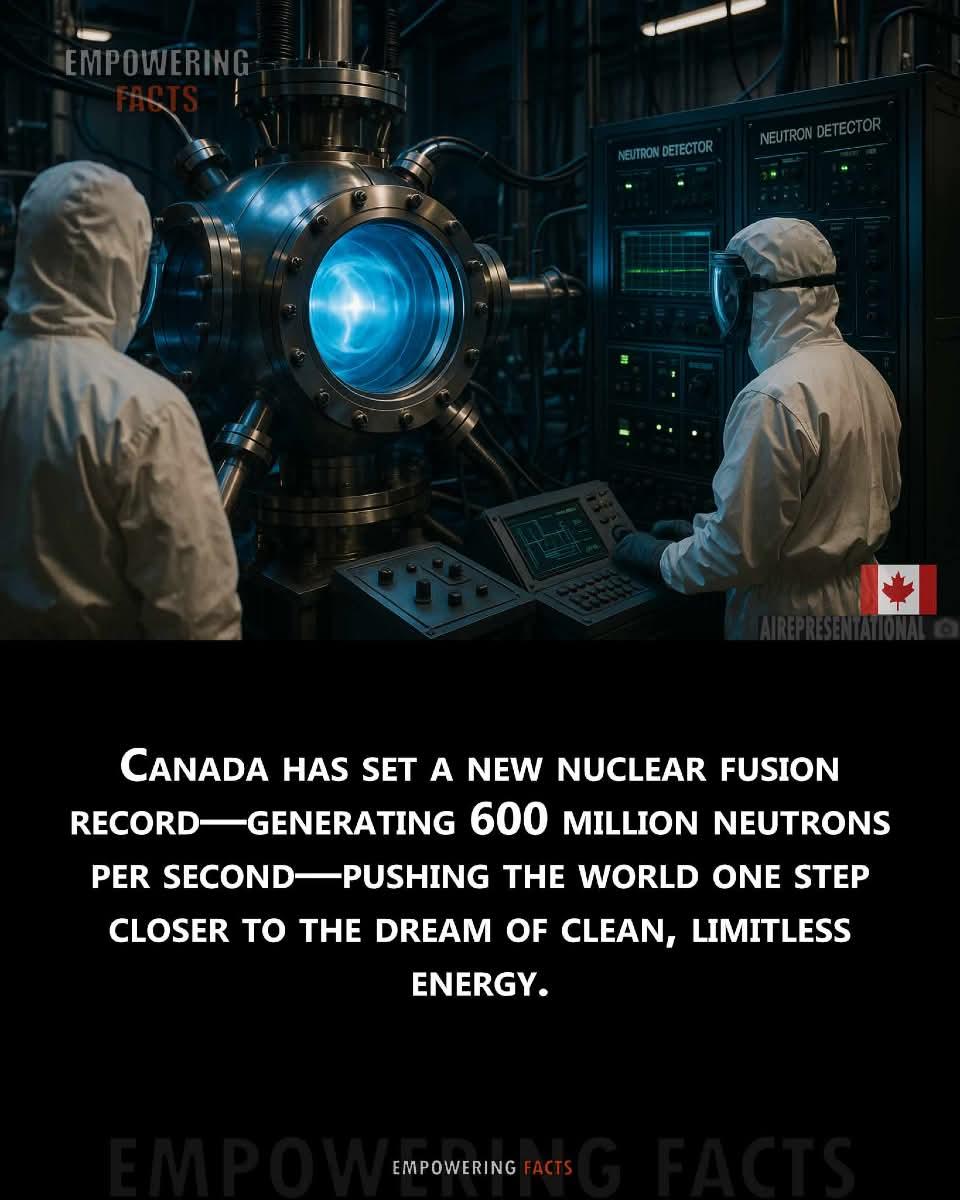
  • In a major breakthrough for energy science, researchers in Canada have achieved a record-setting output in nuclear fusion, generating 600 million neutrons per second during a controlled reaction. This milestone was accomplished using advanced fusion reactor technology designed to replicate the processes that power the sun—where light atomic nuclei fuse to form heavier ones, releasing vast amounts of energy in the process.

    Unlike fission, which splits atoms and produces long-lived radioactive waste, fusion uses elements like hydrogen isotopes and creates minimal byproducts. The Canadian team, using a small spherical tokamak system, demonstrated that high neutron generation is possible in compact and efficient setups, without relying on enormous reactor infrastructure. This not only proves that fusion is viable on a smaller scale, but also confirms significant steps toward sustained, net-positive fusion reactions.

    The generation of 600 million neutrons per second is significant because neutrons are direct indicators of fusion activity. While this doesn’t yet equate to continuous power output, it's a crucial step in achieving energy breakeven—where more energy is produced than consumed. With further refinement, such developments could one day lead to power plants that generate nearly limitless electricity from just a few grams of fuel.

    Canada’s achievement adds momentum to global fusion research, signaling that a clean, safe, and sustainable energy future may be closer than previously imagined. It’s not science fiction anymore—it's science, advancing with every neutron. ⚛️🔬

    #NuclearFusion
    #CleanEnergyFuture
    #CanadianInnovation
    In a major breakthrough for energy science, researchers in Canada have achieved a record-setting output in nuclear fusion, generating 600 million neutrons per second during a controlled reaction. This milestone was accomplished using advanced fusion reactor technology designed to replicate the processes that power the sun—where light atomic nuclei fuse to form heavier ones, releasing vast amounts of energy in the process. Unlike fission, which splits atoms and produces long-lived radioactive waste, fusion uses elements like hydrogen isotopes and creates minimal byproducts. The Canadian team, using a small spherical tokamak system, demonstrated that high neutron generation is possible in compact and efficient setups, without relying on enormous reactor infrastructure. This not only proves that fusion is viable on a smaller scale, but also confirms significant steps toward sustained, net-positive fusion reactions. The generation of 600 million neutrons per second is significant because neutrons are direct indicators of fusion activity. While this doesn’t yet equate to continuous power output, it's a crucial step in achieving energy breakeven—where more energy is produced than consumed. With further refinement, such developments could one day lead to power plants that generate nearly limitless electricity from just a few grams of fuel. Canada’s achievement adds momentum to global fusion research, signaling that a clean, safe, and sustainable energy future may be closer than previously imagined. It’s not science fiction anymore—it's science, advancing with every neutron. ⚛️🔬 #NuclearFusion #CleanEnergyFuture #CanadianInnovation
    0 التعليقات 0 المشاركات 547 مشاهدة
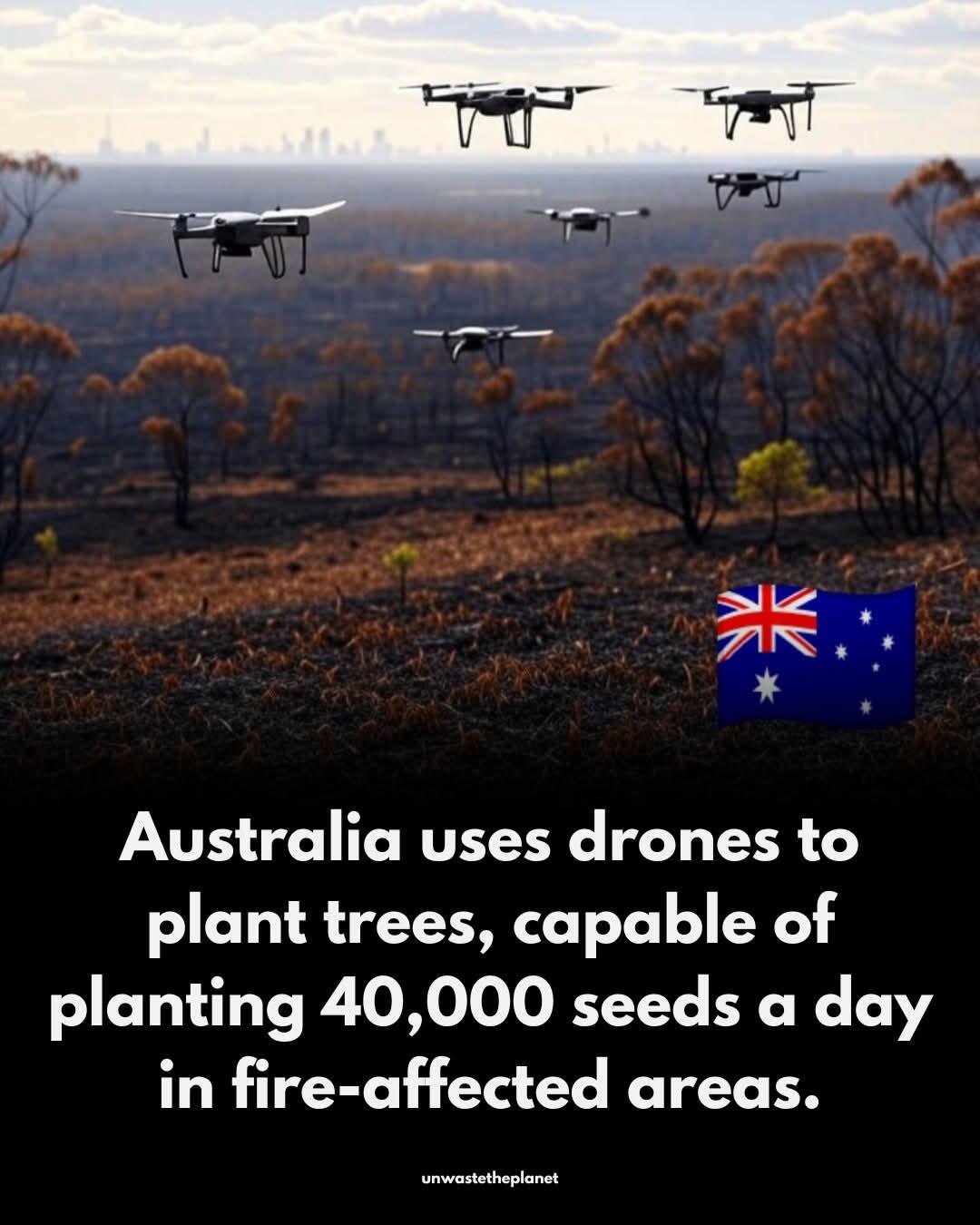
  • Australia is now deploying drones to plant trees—particularly in regions devastated by bushfires—with each drone capable of planting up to 40,000 seeds per day. This technology-driven method is restoring large, damaged ecosystems at a scale and speed that traditional tree-planting methods cannot match, a crucial advantage as climate change continues to intensify the frequency and severity of wildfires.

    The innovation lies in aerial drones equipped with biodegradable seed pods that contain native tree seeds, essential nutrients, and protective coatings to boost germination and survival rates. Guided by GPS and powered by AI, the drones identify optimal planting sites, navigate difficult terrain, and drop the pods with pinpoint accuracy—eliminating the need for manual labor in hazardous or inaccessible areas.

    Traditionally, reforestation has been a slow, labor-intensive process, relying on human workers to plant saplings one by one. Now, with drone-based planting, Australia is pioneering a scalable, high-tech reforestation model that accelerates forest recovery, increases carbon capture, and helps restore critical wildlife habitats. It’s a compelling example of how technology and nature can work together to address environmental destruction in the modern era.

    Sources:
    AirSeed Technologies, “Drone Reforestation Projects in Australia,” 2023.
    The Guardian, “Australian Drones Plant Trees to Fight Climate Change and Restore Forests,” 2023.
    BBC News, “Tree-Planting Drones Aim to Restore Burned Landscapes,” 2023.
    Australia is now deploying drones to plant trees—particularly in regions devastated by bushfires—with each drone capable of planting up to 40,000 seeds per day. This technology-driven method is restoring large, damaged ecosystems at a scale and speed that traditional tree-planting methods cannot match, a crucial advantage as climate change continues to intensify the frequency and severity of wildfires. The innovation lies in aerial drones equipped with biodegradable seed pods that contain native tree seeds, essential nutrients, and protective coatings to boost germination and survival rates. Guided by GPS and powered by AI, the drones identify optimal planting sites, navigate difficult terrain, and drop the pods with pinpoint accuracy—eliminating the need for manual labor in hazardous or inaccessible areas. Traditionally, reforestation has been a slow, labor-intensive process, relying on human workers to plant saplings one by one. Now, with drone-based planting, Australia is pioneering a scalable, high-tech reforestation model that accelerates forest recovery, increases carbon capture, and helps restore critical wildlife habitats. It’s a compelling example of how technology and nature can work together to address environmental destruction in the modern era. Sources: AirSeed Technologies, “Drone Reforestation Projects in Australia,” 2023. The Guardian, “Australian Drones Plant Trees to Fight Climate Change and Restore Forests,” 2023. BBC News, “Tree-Planting Drones Aim to Restore Burned Landscapes,” 2023.
    0 التعليقات 0 المشاركات 654 مشاهدة
  • In a major advancement for sustainable manufacturing, Chinese researchers have developed a process to create a new type of paper from a combination of desert sand and agricultural waste. This innovative material, often referred to as "stone paper," uses calcium carbonate from sand and discarded fibers from sources like cotton stalks. Unlike traditional paper production, which is a resource-intensive process requiring large amounts of water and wood pulp, this method is designed to be free of water, bleaching chemicals, and deforestation.

    This breakthrough technology has significant environmental and economic implications. By transforming abundant, previously unusable materials like desert sand into a valuable resource, China is addressing both the issue of desertification and the high environmental cost of traditional paper production. The resulting paper is not only waterproof and tear-resistant but also recyclable and durable, offering a more sustainable alternative for various applications, including packaging, notebooks, and posters. This shift towards using non-traditional materials for manufacturing demonstrates a new approach to eco-conscious production and has the potential to transform economies in arid regions.

    #SustainableTech #Innovation #DesertPaper #China #GreenManufacturing
    In a major advancement for sustainable manufacturing, Chinese researchers have developed a process to create a new type of paper from a combination of desert sand and agricultural waste. This innovative material, often referred to as "stone paper," uses calcium carbonate from sand and discarded fibers from sources like cotton stalks. Unlike traditional paper production, which is a resource-intensive process requiring large amounts of water and wood pulp, this method is designed to be free of water, bleaching chemicals, and deforestation. This breakthrough technology has significant environmental and economic implications. By transforming abundant, previously unusable materials like desert sand into a valuable resource, China is addressing both the issue of desertification and the high environmental cost of traditional paper production. The resulting paper is not only waterproof and tear-resistant but also recyclable and durable, offering a more sustainable alternative for various applications, including packaging, notebooks, and posters. This shift towards using non-traditional materials for manufacturing demonstrates a new approach to eco-conscious production and has the potential to transform economies in arid regions. #SustainableTech #Innovation #DesertPaper #China #GreenManufacturing
    0 التعليقات 0 المشاركات 490 مشاهدة
الصفحات المعززة
BlackBird Ai
https://bbai.shop