


• First brain scans of ChatGPT users proves AI is eroding memory and critical thinking.
    Over four months, researchers tracked the brain activity of 54 students and found those who regularly relied on AI for writing showed lower memory retention and reduced critical thinking skills, as measured by EEG brain scans.
    These users also produced less original content and had difficulty recalling their own work shortly after completion—a pattern researchers described as “mental passivity.”
    The study, titled The Cognitive Cost of Using LLMs, highlights a key concern: AI-generated convenience may come at the expense of mental engagement.
    Students who started without AI and then transitioned to using tools like ChatGPT showed increased brain activity, suggesting that AI is most beneficial when it enhances, rather than replaces, the thinking process.
    Researchers also warned of echo chambers forming when users passively accept algorithmic answers without scrutiny. The findings point to a clear takeaway — AI can be a valuable tool, but only if we remain active participants in the process.

    #AIandEducation #CriticalThinking #MemoryLoss #ChatGPTStudy #AIEthics #MentalHealthInTech #LearningWithAI #FutureOfLearning #DigitalWellbeing #CognitiveScience #TechAwareness
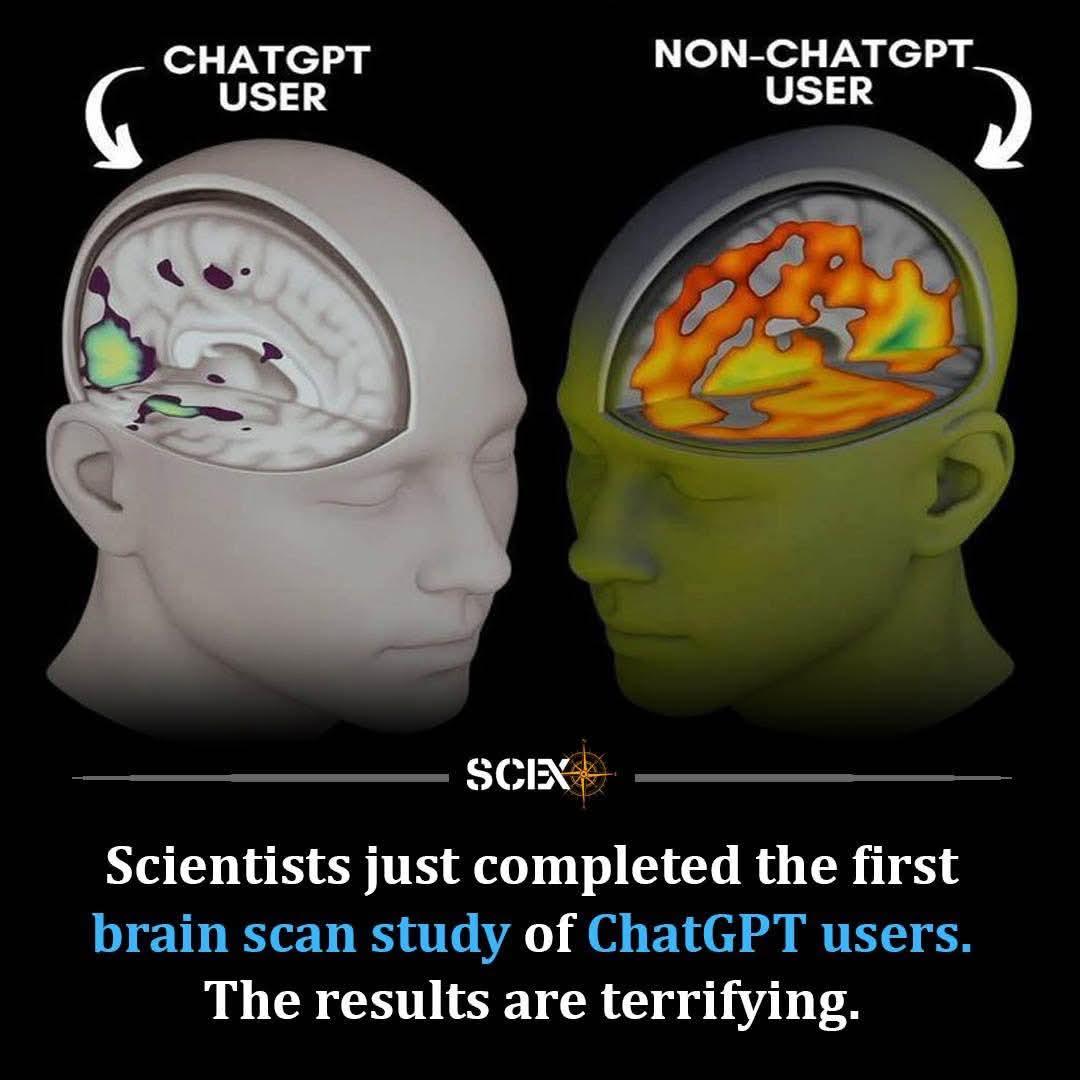
    First brain scans of ChatGPT users proves AI is eroding memory and critical thinking. Over four months, researchers tracked the brain activity of 54 students and found those who regularly relied on AI for writing showed lower memory retention and reduced critical thinking skills, as measured by EEG brain scans. These users also produced less original content and had difficulty recalling their own work shortly after completion—a pattern researchers described as “mental passivity.” The study, titled The Cognitive Cost of Using LLMs, highlights a key concern: AI-generated convenience may come at the expense of mental engagement. Students who started without AI and then transitioned to using tools like ChatGPT showed increased brain activity, suggesting that AI is most beneficial when it enhances, rather than replaces, the thinking process. Researchers also warned of echo chambers forming when users passively accept algorithmic answers without scrutiny. The findings point to a clear takeaway — AI can be a valuable tool, but only if we remain active participants in the process. #AIandEducation #CriticalThinking #MemoryLoss #ChatGPTStudy #AIEthics #MentalHealthInTech #LearningWithAI #FutureOfLearning #DigitalWellbeing #CognitiveScience #TechAwareness
    0 Commentarios 0 Acciones 599 Views
  • The Star That Defied Time: Methuselah Once Seemed Older Than the Universe Itself

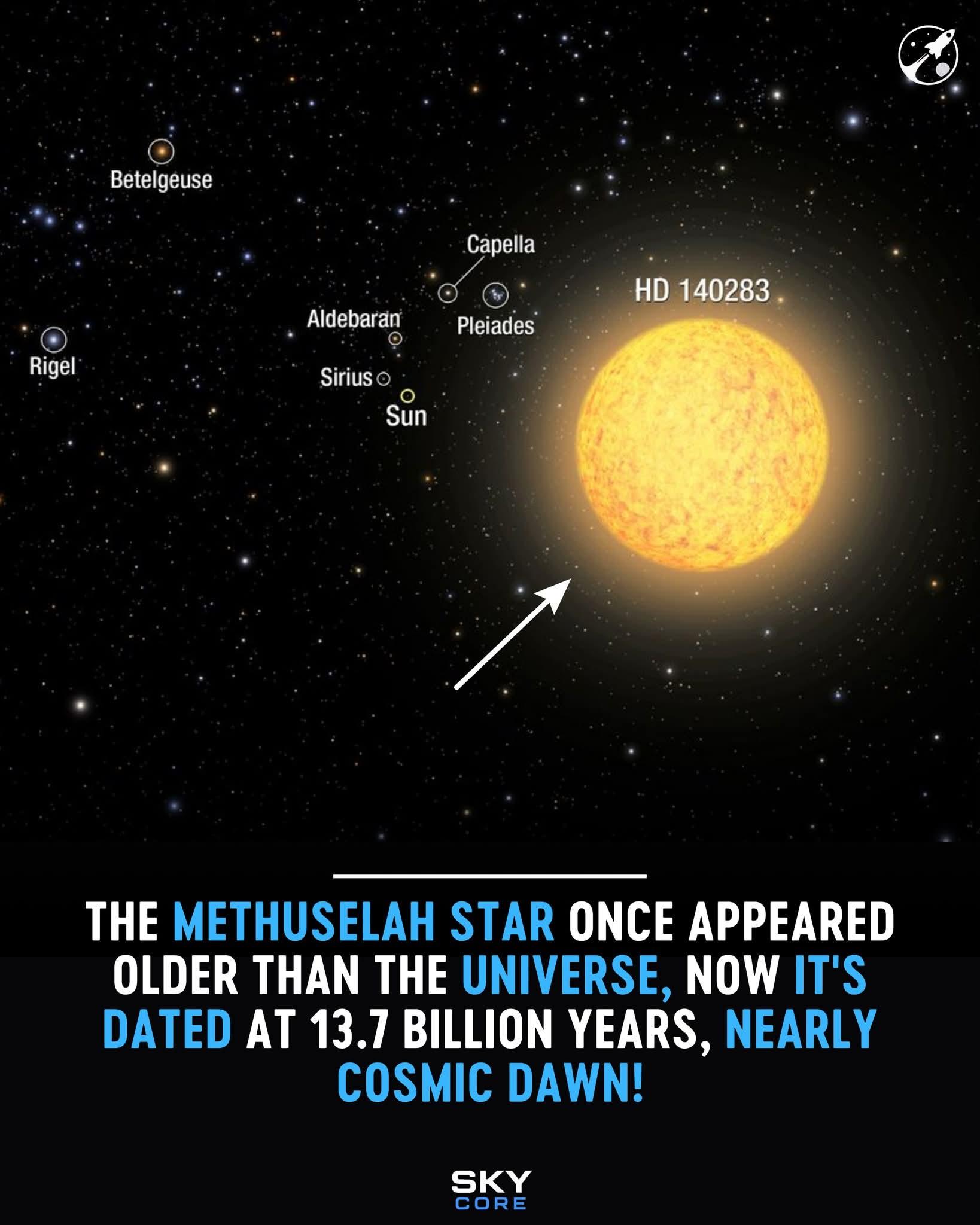
    In a corner of our cosmic neighborhood, just 190 light-years from Earth, shines one of the most mysterious stars ever studied HD 140283, better known as the Methuselah Star. For years, this ancient stellar relic baffled scientists with an age estimate that appeared to break the laws of physics. Early observations suggested it was 14.5 billion years old a staggering number considering the universe itself is only 13.8 billion years old. How could a star predate the Big Bang?

    The paradox sparked intense scrutiny. Astronomers dove deeper, refining stellar evolution models and adjusting for new data, including parallax measurements and updated elemental abundances. With improved methods, the star’s age was revised to approximately 13.7 billion years placing it just within the cosmic timeline. While no longer older than the universe, Methuselah remains one of the oldest known stars, formed shortly after the first light emerged from the darkness following the Big Bang.

    The Methuselah Star is a low-metallicity subgiant, meaning it contains very few elements heavier than helium a hallmark of the earliest stars. Its presence so close to Earth offers a rare, almost intimate connection to the dawn of the cosmos. When we look at it, we’re not just seeing a star we’re peering into the earliest chapters of the universe's story, written in ancient light that has traveled across eons to reach us.

    Credit: Age estimates and stellar data based on research from the Hubble Space Telescope, ESA’s Gaia mission, and published findings in The Astrophysical Journal, updated through 2025.
    The Star That Defied Time: Methuselah Once Seemed Older Than the Universe Itself In a corner of our cosmic neighborhood, just 190 light-years from Earth, shines one of the most mysterious stars ever studied HD 140283, better known as the Methuselah Star. For years, this ancient stellar relic baffled scientists with an age estimate that appeared to break the laws of physics. Early observations suggested it was 14.5 billion years old a staggering number considering the universe itself is only 13.8 billion years old. How could a star predate the Big Bang? The paradox sparked intense scrutiny. Astronomers dove deeper, refining stellar evolution models and adjusting for new data, including parallax measurements and updated elemental abundances. With improved methods, the star’s age was revised to approximately 13.7 billion years placing it just within the cosmic timeline. While no longer older than the universe, Methuselah remains one of the oldest known stars, formed shortly after the first light emerged from the darkness following the Big Bang. The Methuselah Star is a low-metallicity subgiant, meaning it contains very few elements heavier than helium a hallmark of the earliest stars. Its presence so close to Earth offers a rare, almost intimate connection to the dawn of the cosmos. When we look at it, we’re not just seeing a star we’re peering into the earliest chapters of the universe's story, written in ancient light that has traveled across eons to reach us. Credit: Age estimates and stellar data based on research from the Hubble Space Telescope, ESA’s Gaia mission, and published findings in The Astrophysical Journal, updated through 2025.
    0 Commentarios 0 Acciones 356 Views
  • The Star That Defied Time: Methuselah Once Seemed Older Than the Universe Itself

    In a corner of our cosmic neighborhood, just 190 light-years from Earth, shines one of the most mysterious stars ever studied HD 140283, better known as the Methuselah Star. For years, this ancient stellar relic baffled scientists with an age estimate that appeared to break the laws of physics. Early observations suggested it was 14.5 billion years old a staggering number considering the universe itself is only 13.8 billion years old. How could a star predate the Big Bang?

    The paradox sparked intense scrutiny. Astronomers dove deeper, refining stellar evolution models and adjusting for new data, including parallax measurements and updated elemental abundances. With improved methods, the star’s age was revised to approximately 13.7 billion years placing it just within the cosmic timeline. While no longer older than the universe, Methuselah remains one of the oldest known stars, formed shortly after the first light emerged from the darkness following the Big Bang.

    The Methuselah Star is a low-metallicity subgiant, meaning it contains very few elements heavier than helium a hallmark of the earliest stars. Its presence so close to Earth offers a rare, almost intimate connection to the dawn of the cosmos. When we look at it, we’re not just seeing a star we’re peering into the earliest chapters of the universe's story, written in ancient light that has traveled across eons to reach us.

    Credit: Age estimates and stellar data based on research from the Hubble Space Telescope, ESA’s Gaia mission, and published findings in The Astrophysical Journal, updated through 2025.
    The Star That Defied Time: Methuselah Once Seemed Older Than the Universe Itself In a corner of our cosmic neighborhood, just 190 light-years from Earth, shines one of the most mysterious stars ever studied HD 140283, better known as the Methuselah Star. For years, this ancient stellar relic baffled scientists with an age estimate that appeared to break the laws of physics. Early observations suggested it was 14.5 billion years old a staggering number considering the universe itself is only 13.8 billion years old. How could a star predate the Big Bang? The paradox sparked intense scrutiny. Astronomers dove deeper, refining stellar evolution models and adjusting for new data, including parallax measurements and updated elemental abundances. With improved methods, the star’s age was revised to approximately 13.7 billion years placing it just within the cosmic timeline. While no longer older than the universe, Methuselah remains one of the oldest known stars, formed shortly after the first light emerged from the darkness following the Big Bang. The Methuselah Star is a low-metallicity subgiant, meaning it contains very few elements heavier than helium a hallmark of the earliest stars. Its presence so close to Earth offers a rare, almost intimate connection to the dawn of the cosmos. When we look at it, we’re not just seeing a star we’re peering into the earliest chapters of the universe's story, written in ancient light that has traveled across eons to reach us. Credit: Age estimates and stellar data based on research from the Hubble Space Telescope, ESA’s Gaia mission, and published findings in The Astrophysical Journal, updated through 2025.
    0 Commentarios 0 Acciones 356 Views
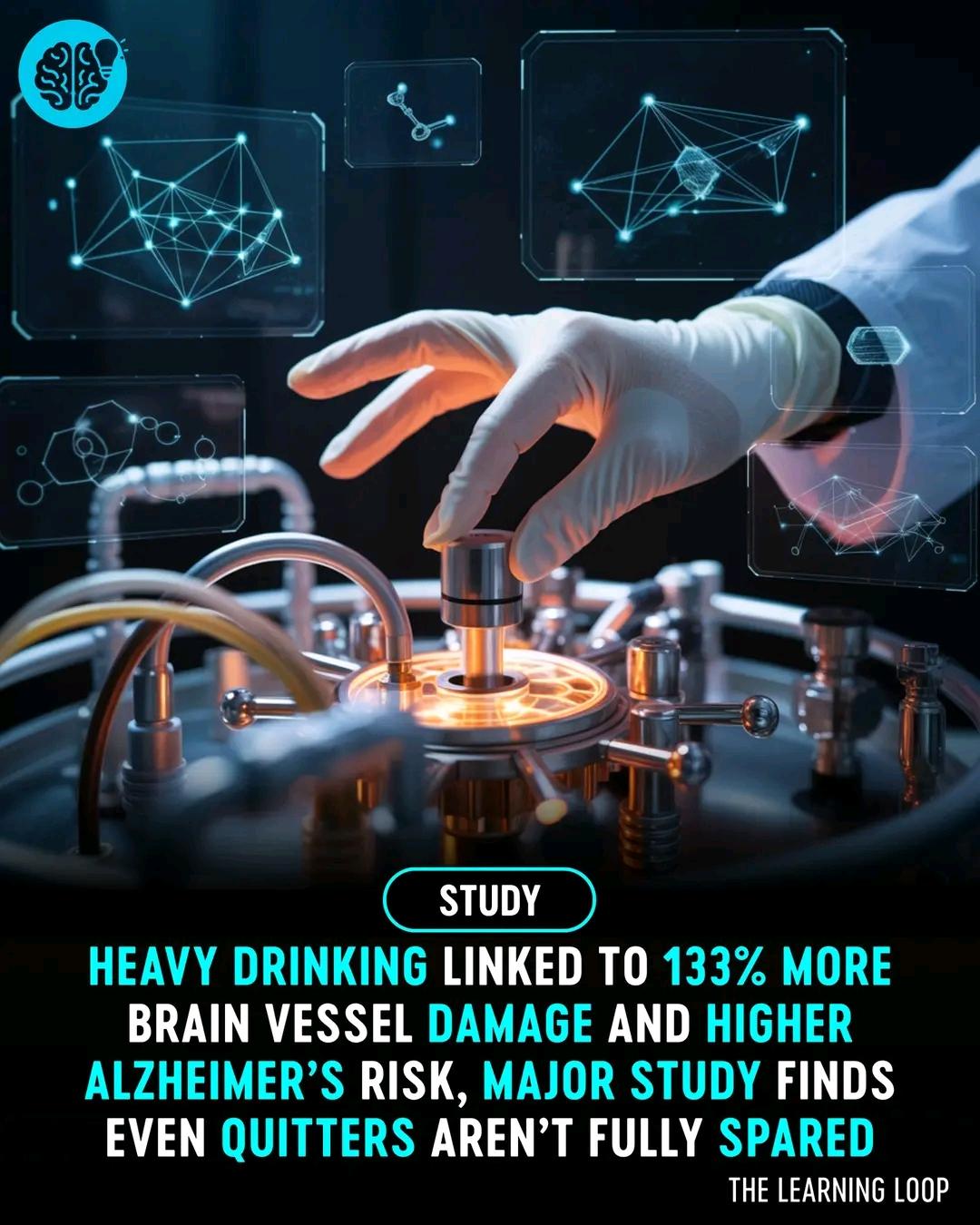
  • A major new study out of Brazil has revealed alarming evidence that heavy drinking can leave a lifelong mark on the brain. Researchers at the University of São Paulo analyzed the brains of 1,781 people, comparing autopsy findings with detailed lifetime drinking histories. The results were stark: heavy drinkers were 133% more likely to have vascular brain lesions, damage to small blood vessels, compared to lifelong abstainers. Even those who had quit heavy drinking years before were 89% more likely to show this kind of brain injury.

    The dangers don’t end there. The study found that heavy drinkers had a 41% higher chance of developing tau protein tangles, a classic hallmark of Alzheimer’s disease, while former heavy drinkers had a 31% higher risk. Perhaps most sobering, people with a history of heavy alcohol use died on average 13 years earlier than those who never drank. The researchers also noted lower brain mass-to-height ratios and more reported memory and cognitive problems in these groups, even if some effects weren’t as clear in living moderate or heavy drinkers.

    While the study relied partly on family reporting for drinking habits and couldn’t conclusively prove that alcohol alone caused all the brain damage, it adds substantial weight to the list of reasons for caution. The risks of drinking, especially heavy or sustained use, may last long after the last drink is poured.
    📚 Source: University of São Paulo, Brazil (2025) | Study PMID: 40203226
    A major new study out of Brazil has revealed alarming evidence that heavy drinking can leave a lifelong mark on the brain. Researchers at the University of São Paulo analyzed the brains of 1,781 people, comparing autopsy findings with detailed lifetime drinking histories. The results were stark: heavy drinkers were 133% more likely to have vascular brain lesions, damage to small blood vessels, compared to lifelong abstainers. Even those who had quit heavy drinking years before were 89% more likely to show this kind of brain injury. The dangers don’t end there. The study found that heavy drinkers had a 41% higher chance of developing tau protein tangles, a classic hallmark of Alzheimer’s disease, while former heavy drinkers had a 31% higher risk. Perhaps most sobering, people with a history of heavy alcohol use died on average 13 years earlier than those who never drank. The researchers also noted lower brain mass-to-height ratios and more reported memory and cognitive problems in these groups, even if some effects weren’t as clear in living moderate or heavy drinkers. While the study relied partly on family reporting for drinking habits and couldn’t conclusively prove that alcohol alone caused all the brain damage, it adds substantial weight to the list of reasons for caution. The risks of drinking, especially heavy or sustained use, may last long after the last drink is poured. 📚 Source: University of São Paulo, Brazil (2025) | Study PMID: 40203226
    0 Commentarios 0 Acciones 363 Views
  • This video is a full business documentary on Microsoft, Bill Gates, and Paul Allen. It features a lot of archive footage of the early days at microsoft, a lot of old interviews with bill gates, as well as displaying old microsoft products.

    One of my favorite things about making this video was actually going through old microsoft footage and finding the first windows operating system (windows 1.0), the first MS-Dos footage, Windows 95 footage and commercials, etc.

    But ya, this was a pretty full-on business documentary...but because Microsoft is a trillion dollar company with a lot of history, I obviously couldn't get into a lot of topics that i wanted to talk about.

    For example, I wanted to talk about the relationship between Microsoft and Apple a lot more. I wanted to mention Steve Ballmer an Ric Weilands importance to the company. I wanted to talk about what happened to Kent Evans (he unfortunately passed away as a teenager). I wanted to talk about microsofts other investments and their future going ahead with Satya Nadella. I also wanted to dive into bill gates history and biography, but there was just no time for any of that. Most of these could be separate documentaries in themselves.

    This video is about the lakeside computer club. And how a group of teenagers in seattle took over the computer industry, the operating system industry, and the internet browser industry. They also took a giant chunk out of other business fields as well like the gaming industry with xbox and mojang/minecraft, the movie industry with dreamworks, the travel industry with expedia, the social networking industry with linkedin, video calling with skype...etc.
    This video is a full business documentary on Microsoft, Bill Gates, and Paul Allen. It features a lot of archive footage of the early days at microsoft, a lot of old interviews with bill gates, as well as displaying old microsoft products. One of my favorite things about making this video was actually going through old microsoft footage and finding the first windows operating system (windows 1.0), the first MS-Dos footage, Windows 95 footage and commercials, etc. But ya, this was a pretty full-on business documentary...but because Microsoft is a trillion dollar company with a lot of history, I obviously couldn't get into a lot of topics that i wanted to talk about. For example, I wanted to talk about the relationship between Microsoft and Apple a lot more. I wanted to mention Steve Ballmer an Ric Weilands importance to the company. I wanted to talk about what happened to Kent Evans (he unfortunately passed away as a teenager). I wanted to talk about microsofts other investments and their future going ahead with Satya Nadella. I also wanted to dive into bill gates history and biography, but there was just no time for any of that. Most of these could be separate documentaries in themselves. This video is about the lakeside computer club. And how a group of teenagers in seattle took over the computer industry, the operating system industry, and the internet browser industry. They also took a giant chunk out of other business fields as well like the gaming industry with xbox and mojang/minecraft, the movie industry with dreamworks, the travel industry with expedia, the social networking industry with linkedin, video calling with skype...etc.
    0 Commentarios 0 Acciones 553 Views
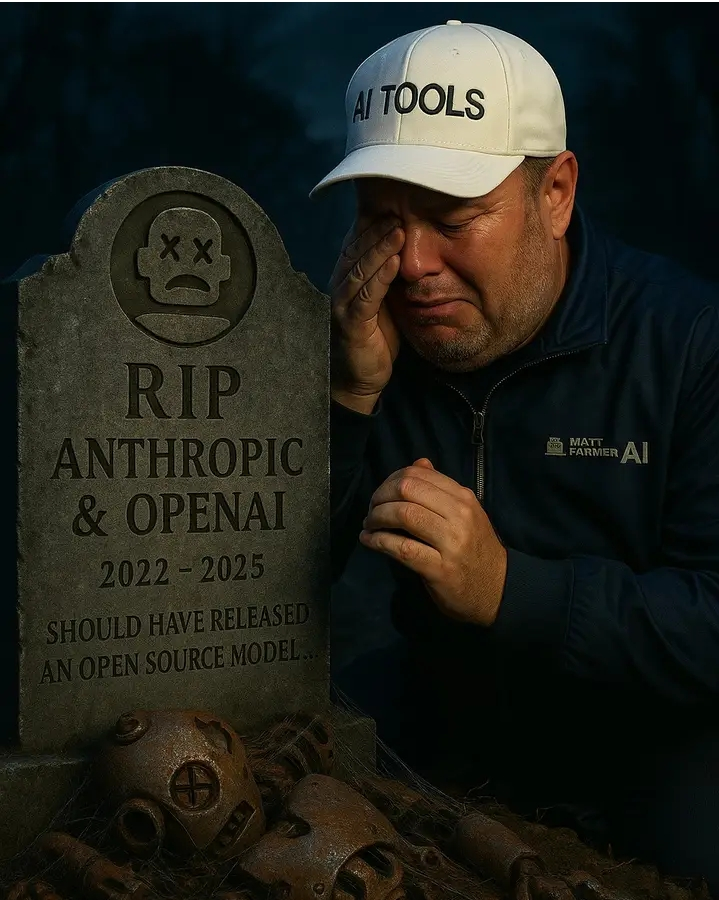
  • 💀 R.I.P. Anthropic & OpenAI: Another DeepSeek Moment Just Hit 💀

    China's Moonshot AI just unleashed Kimi K2, and this could be the most disruptive open-source release since DeepSeek sent shockwaves through Silicon Valley.

    It absolutely dominates at coding, autonomous agents, and tool calling. The 3 capabilities that actually matter for real AI work.

    Let me break down why this is a big deal:

    🎯 Coding Dominance - Crushes GPT-4.1 on coding benchmarks (65.8% vs 54.6% on SWE-bench) and rivals Claude Opus 4 while costing 90% less to operate.

    🤖 Agentic Intelligence - Purpose-built for autonomous workflows. Executes multi-step plans, adapts strategies in real-time, and orchestrates complex tool chains without breaking.

    🛠️ Tool Integration - Dramatically more reliable at function calls than any competitor. When other models break or format calls incorrectly, Kimi K2 consistently gets them right.

    💰 Ridiculously Cheap API Access - $0.15 per million input tokens vs Claude Opus 4's $15. That's 100x cheaper for objectively better performance on coding benchmarks.

    🔓 Completely Open Source - Download the full 1-trillion parameter model and run it locally. No API limits, full customization, and zero vendor lock-in. Open-source weights + code already public!

    🧠 128K Context Window - Process entire codebases, documentation libraries, and complex project histories without losing a single detail.

    DeepSeek proved that Chinese AI could match Silicon Valley's best. Kimi K2 proves they can surpass it while making it accessible to everyone.

    This represents a fundamental shift in AI capability distribution. While premium models focus on chat, Kimi K2 was designed from the ground up for real work.

    We have a new open source king 👑

    #kimik2 #aitools #AI #OpenSource #AIcoding #DeepSeek #AgenticAI #openai #GPT5 #Anthropic #ClaudeAI #LLM #AIAgents
    💀 R.I.P. Anthropic & OpenAI: Another DeepSeek Moment Just Hit 💀 China's Moonshot AI just unleashed Kimi K2, and this could be the most disruptive open-source release since DeepSeek sent shockwaves through Silicon Valley. It absolutely dominates at coding, autonomous agents, and tool calling. The 3 capabilities that actually matter for real AI work. Let me break down why this is a big deal: 🎯 Coding Dominance - Crushes GPT-4.1 on coding benchmarks (65.8% vs 54.6% on SWE-bench) and rivals Claude Opus 4 while costing 90% less to operate. 🤖 Agentic Intelligence - Purpose-built for autonomous workflows. Executes multi-step plans, adapts strategies in real-time, and orchestrates complex tool chains without breaking. 🛠️ Tool Integration - Dramatically more reliable at function calls than any competitor. When other models break or format calls incorrectly, Kimi K2 consistently gets them right. 💰 Ridiculously Cheap API Access - $0.15 per million input tokens vs Claude Opus 4's $15. That's 100x cheaper for objectively better performance on coding benchmarks. 🔓 Completely Open Source - Download the full 1-trillion parameter model and run it locally. No API limits, full customization, and zero vendor lock-in. Open-source weights + code already public! 🧠 128K Context Window - Process entire codebases, documentation libraries, and complex project histories without losing a single detail. DeepSeek proved that Chinese AI could match Silicon Valley's best. Kimi K2 proves they can surpass it while making it accessible to everyone. This represents a fundamental shift in AI capability distribution. While premium models focus on chat, Kimi K2 was designed from the ground up for real work. We have a new open source king 👑 #kimik2 #aitools #AI #OpenSource #AIcoding #DeepSeek #AgenticAI #openai #GPT5 #Anthropic #ClaudeAI #LLM #AIAgents
    Love
    2
    0 Commentarios 0 Acciones 654 Views
  • Nuclear waste is reusable. Why aren’t we doing it? #nuclearpower #nuclearrecycling #nuclearwaste
    A nuclear fuel rod is used for 3-6 years. After that, it’s taken out of the reactor and then continues to stay radioactive for hundreds of thousands of years. Talk about inefficiency. But French nuclear fuel company ORANO is one of the very few companies recycling nuclear fuel on a commercial scale – and has led this field for decades. We went there to find out why.

    #nuclearrecycling #nuclearwaste #nuclearpower

    Credits:
    Reporter: Kiyo Dörrer
    Video Editor: Frederik Willmann
    Camera: Marco Borowski
    Supervising Editors: Malte Rohwer-Kahlmann
    Fact-Check: Jeanette Cwienk
    Thumbnail: Em Chabridon
    Nuclear waste is reusable. Why aren’t we doing it? #nuclearpower #nuclearrecycling #nuclearwaste A nuclear fuel rod is used for 3-6 years. After that, it’s taken out of the reactor and then continues to stay radioactive for hundreds of thousands of years. Talk about inefficiency. But French nuclear fuel company ORANO is one of the very few companies recycling nuclear fuel on a commercial scale – and has led this field for decades. We went there to find out why. #nuclearrecycling #nuclearwaste #nuclearpower Credits: Reporter: Kiyo Dörrer Video Editor: Frederik Willmann Camera: Marco Borowski Supervising Editors: Malte Rohwer-Kahlmann Fact-Check: Jeanette Cwienk Thumbnail: Em Chabridon
    0 Commentarios 0 Acciones 533 Views
BlackBird Ai
https://bbai.shop