

 Ai and Tools
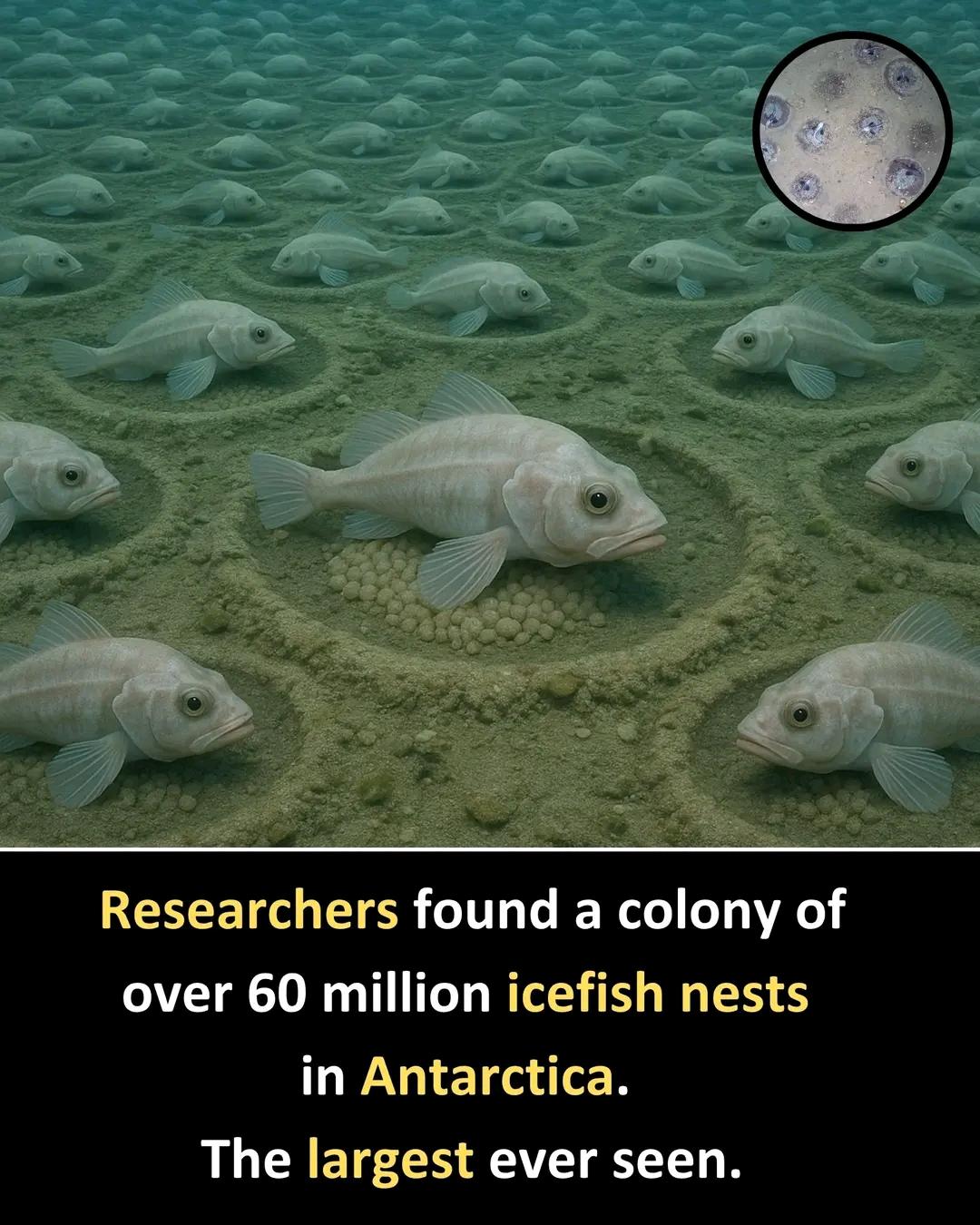
In a groundbreaking discovery beneath the frigid Weddell Sea near Antarctica, researchers uncovered a massive colony of over 60 million icefish (*Neopagetopsis ionah*) nests — the largest known fish breeding colony on Earth. Stretching across 240 square kilometers (an area nearly the size of Malta), these neatly spaced circular nests were each about 75 centimeters in diameter and often guarded by a single adult icefish. The fish use their bodies and fins to clear sediment and lay thousands of eggs in the bare gravel.
What makes this discovery remarkable is not just the sheer scale but the ecological importance. This densely packed nursery supports a unique under-ice ecosystem, attracting predators like seals and providing vital insights into polar marine biodiversity. The site’s proximity to nutrient-rich upwellings may explain its productivity, prompting calls for urgent conservation measures to protect this fragile and previously unknown biological hotspot.
What makes this discovery remarkable is not just the sheer scale but the ecological importance. This densely packed nursery supports a unique under-ice ecosystem, attracting predators like seals and providing vital insights into polar marine biodiversity. The site’s proximity to nutrient-rich upwellings may explain its productivity, prompting calls for urgent conservation measures to protect this fragile and previously unknown biological hotspot.
In a groundbreaking discovery beneath the frigid Weddell Sea near Antarctica, researchers uncovered a massive colony of over 60 million icefish (*Neopagetopsis ionah*) nests — the largest known fish breeding colony on Earth. Stretching across 240 square kilometers (an area nearly the size of Malta), these neatly spaced circular nests were each about 75 centimeters in diameter and often guarded by a single adult icefish. The fish use their bodies and fins to clear sediment and lay thousands of eggs in the bare gravel.
What makes this discovery remarkable is not just the sheer scale but the ecological importance. This densely packed nursery supports a unique under-ice ecosystem, attracting predators like seals and providing vital insights into polar marine biodiversity. The site’s proximity to nutrient-rich upwellings may explain its productivity, prompting calls for urgent conservation measures to protect this fragile and previously unknown biological hotspot.


 English
 Bangla
 Spanish
 China
China
 French
 German
 Russian